TravelType

history

History in Ottawa

Ottawa, Canada's federal capital, holds much of the country's history in plain sight. Confederation Square and the Centennial Flame anchor the civic core, while the Langevin Block houses the Office of the Prime Minister. Earnscliffe connects visitors to the nation's early political life. The Canadian War Museum and the Canada Aviation and Space Museum approach national history from very different angles, and the Monument to Canadian Aid Workers alongside the Almonte Cenotaph honour those who served at great personal cost. Library and Archives Canada preserves the documentary record that ties it all together.

14 places · Ottawa, Canada · Editorially curated

  • Almonte Cenotaph

    Almonte Cenotaph

    Ottawa

    culturelocal gems

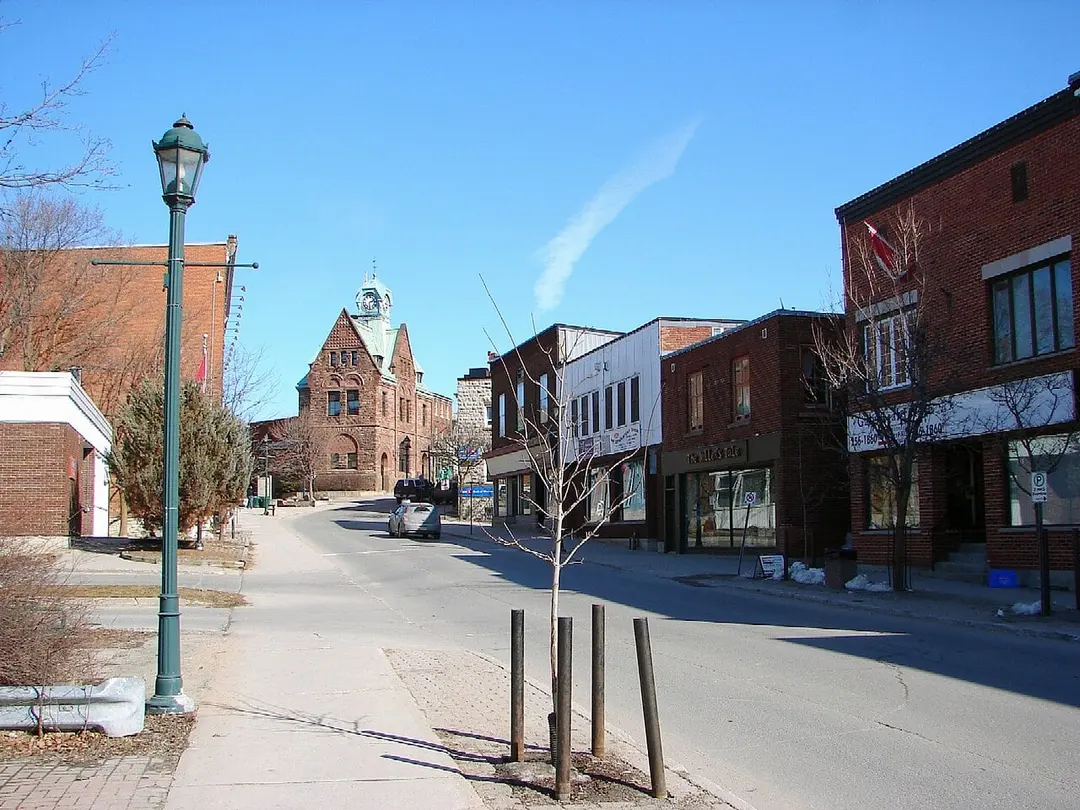
    The Almonte Cenotaph is a war memorial in the small community of Almonte in Ontario, Canada — now a ward of the municipality of Mississippi Mills. Like many Canadian small-town cenotaphs, it commemorates the fallen from the region who served in the World Wars. Almonte is a former mill town on the Mississippi River, best known as the birthplace of James Naismith, the inventor of basketball. The cenotaph stands in the town center and is especially central to the community's Remembrance Day ceremonies on November 11. A simple, dignified memorial, representative of many similar sites across Canada where communities collectively honor their war dead.
  • Canadian Tire Centre Ottawa

    Canadian Tire Centre Ottawa

    Ottawa

    architectureoutdoor activitieslocal gems

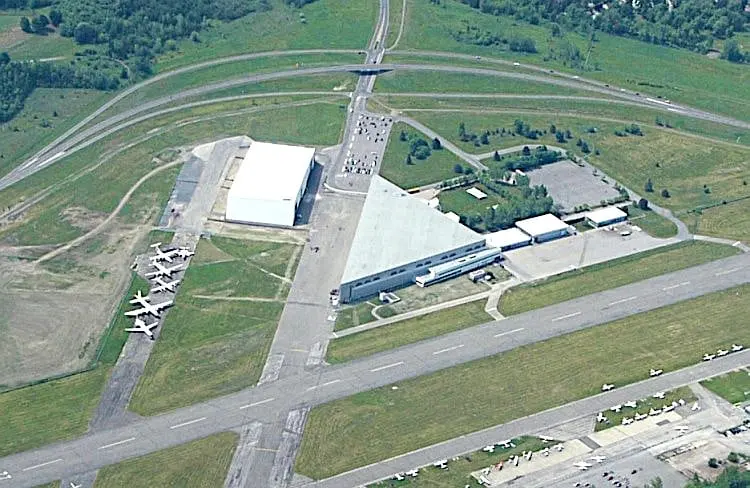
    The Canadian Tire Centre is the home arena of the Ottawa Senators NHL hockey team, located in the suburb of Kanata west of Ottawa. It opened in January 1996 as The Palladium and has carried several sponsor names over the years, most recently Scotiabank Place until 2013. With up to 19,153 seats across three tiers, it is the region's largest sports venue. Alongside Senators games it hosts concerts and other major events. Its car-oriented suburban location is characteristic of North American arenas built deliberately outside city centres during the 1990s.

  • Canadian War Museum

    Canadian War Museum

    Ottawa

    culture

    The Canadian War Museum in Ottawa is Canada's national museum dedicated to military history. Founded in 1880, it moved to its striking contemporary building in LeBreton Flats in 2005. Spanning over 40,000 square metres along the Ottawa River, it documents conflicts involving Canadians from Indigenous peoples and Metis to modern international missions. The museum houses a Military History Research Centre, a theatre, and extensive conservation spaces alongside permanent exhibitions. It serves both as an educational institution and a place of reflection on the human cost of war.

  • Centennial Flame

    Centennial Flame

    Ottawa

    culture

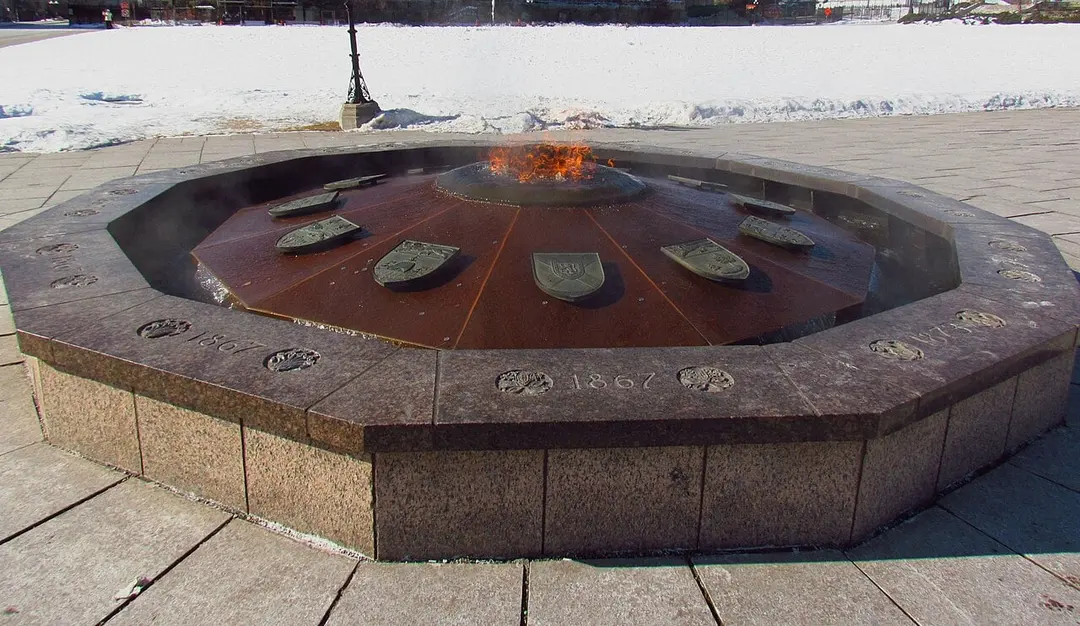
    The Centennial Flame is a fountain monument on Parliament Hill in Ottawa, erected to mark the 100th anniversary of Canadian Confederation. First lit in January 1967, it has burned continuously ever since. Originally fuelled by natural gas, it switched to biogas in 2021, which also prevents the fountain from freezing in winter. Coins tossed into the water are donated to people with disabilities. Positioned on the pathway between the Queen's Gates and the Peace Tower, it is often the first image visitors associate with the parliament.

  • Confederation Square

    Confederation Square

    Ottawa

    architectureculture

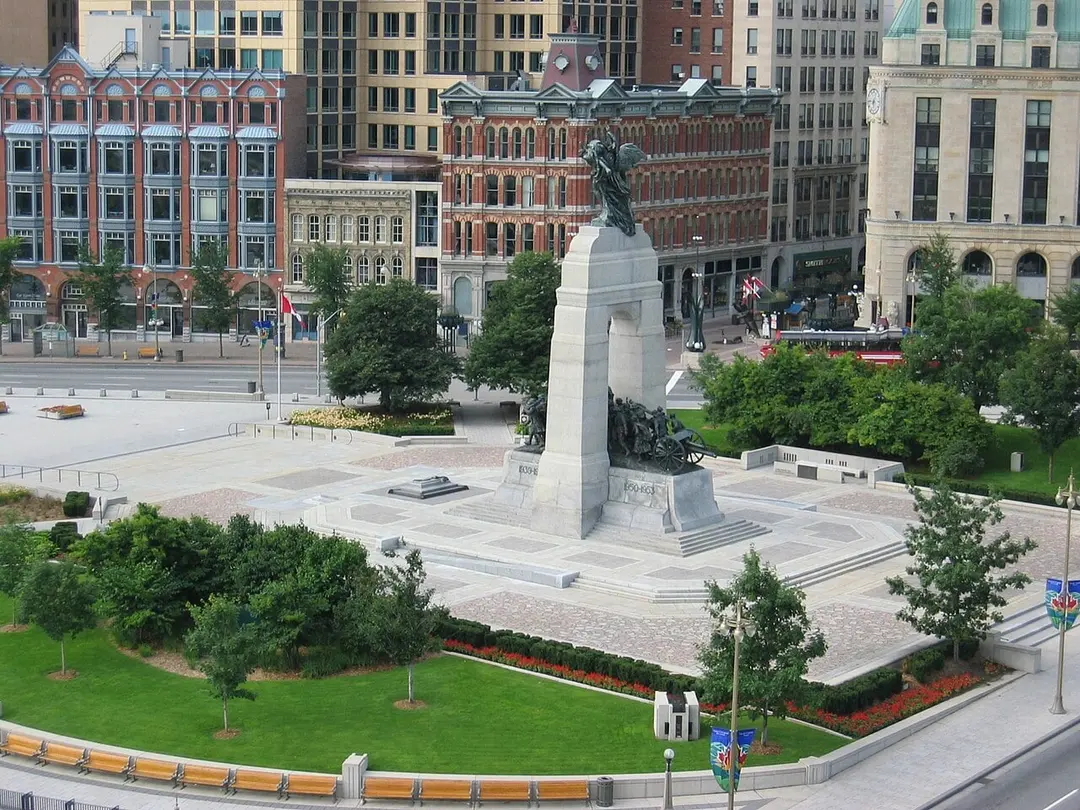
    Confederation Square sits at the heart of Ottawa, Canada's capital, immediately adjacent to Parliament Hill. The triangular plaza serves as the country's primary ceremonial space and hosts national commemorations, most notably the Remembrance Day service on November 11th each year. At its center stands the National War Memorial, unveiled in 1939, with the sculptural group "The Response" — a column of soldiers passing through a triumphal arch. It honors Canadians who died in both World Wars and was later expanded to include inscriptions for the Korean War and other conflicts. The Tomb of the Unknown Soldier at the base receives a regular honour guard. The square also holds the Valiants Memorial, commemorating ten remarkable Canadians, and sits at the intersection of some of Ottawa's most prominent streets.

  • Fletcher Wildlife Gardens

    Fletcher Wildlife Gardens

    Ottawa

    nature

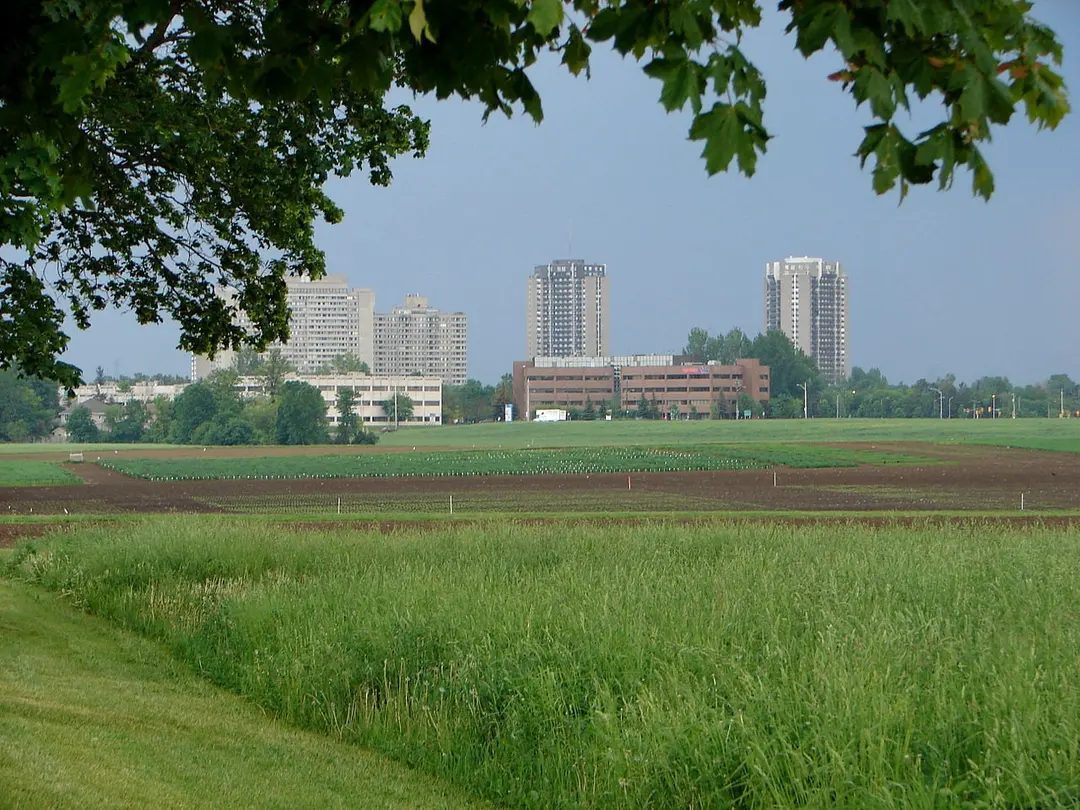
    The Fletcher Wildlife Gardens are a nature-focused wildlife garden within Ottawa's Central Experimental Farm, a National Historic Site of Canada. The garden was specifically designed to encourage native plants and attract wildlife – including butterflies, frogs, and a wide variety of bird species. As part of the 426-hectare Experimental Farm, which has conducted agricultural research since 1886, the Wildlife Gardens form a green oasis in the heart of the national capital. For nature lovers, the garden is an ideal spot for quiet walks and birdwatching.

  • Langevin Block (Office of the Prime Minister)

    Langevin Block (Office of the Prime Minister)

    Ottawa

    architectureculture

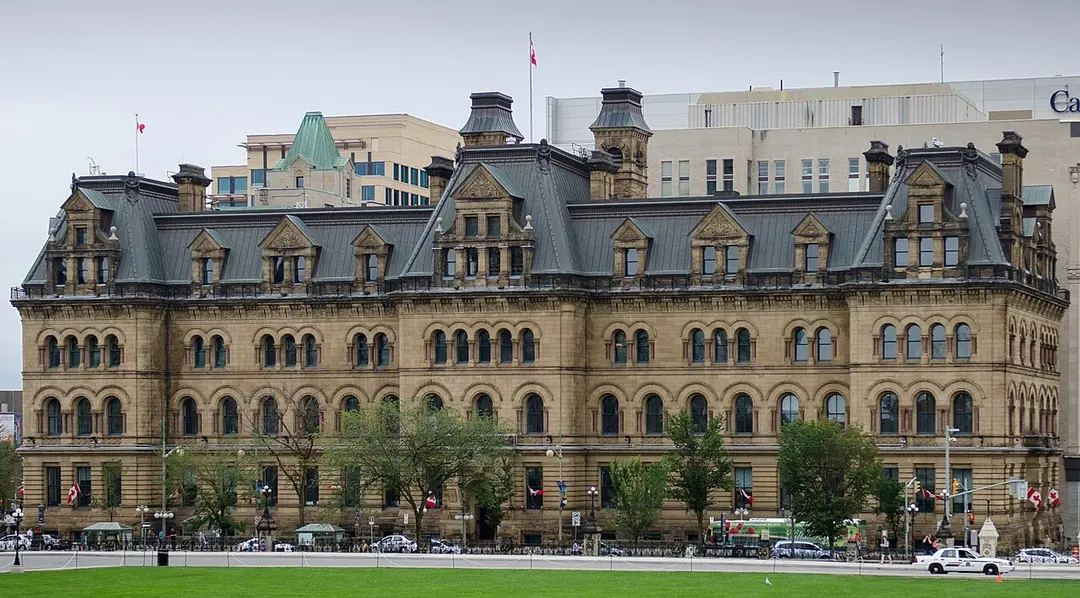
    The Langevin Block – now officially the Office of the Prime Minister and Privy Council – is a Victorian government building from 1889 facing Parliament Hill in Ottawa. It houses the working office of the Canadian Prime Minister and the Privy Council offices. Named after Hector-Louis Langevin, one of the Fathers of Canadian Confederation, the building was designated a national historic site in 1977. In 2017, amid discussions about Langevin's role in the indigenous residential school system, it was renamed to its functional title. The imposing facade is clearly visible from the street.

  • Library and Archives Canada

    Library and Archives Canada

    Ottawa

    cultureknowledge

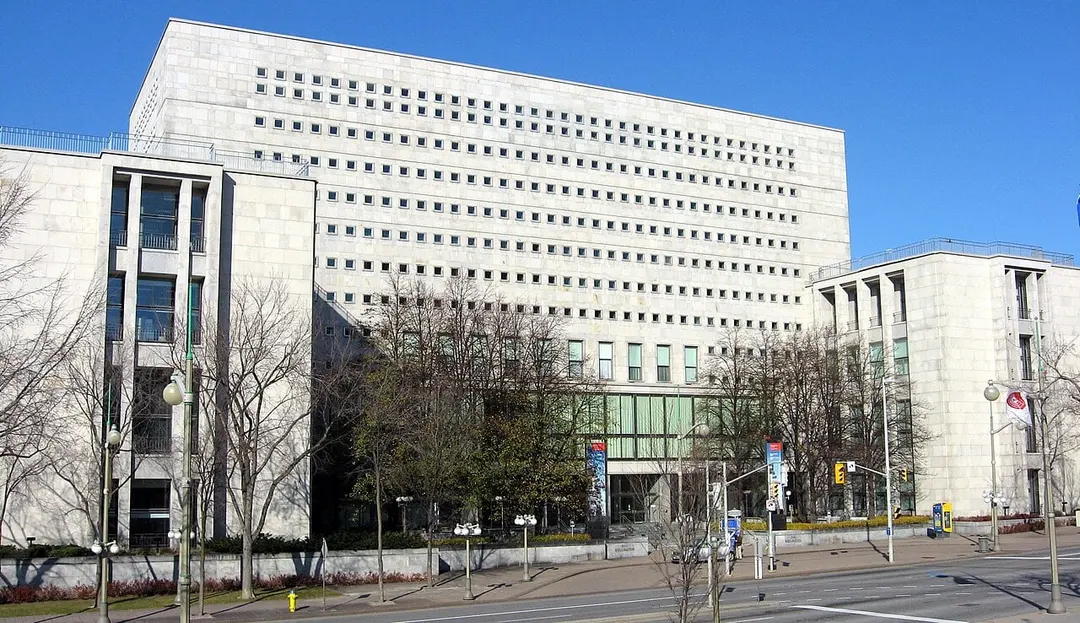
    Library and Archives Canada was formed in 2004 by merging the National Library of Canada (founded 1953) with the National Archives of Canada. Based in Ottawa, the institution is responsible for preserving and providing access to Canada's entire documentary heritage — from historical government records to audio recordings, photographs, and books. Its holdings rank among the 16 largest library collections in the world, and it also functions as an active research institute. Visitors can access historical collections, view exhibitions, and conduct genealogical research.

  • Notre-Dame Cathedral Basilica Ottawa

    Notre-Dame Cathedral Basilica Ottawa

    Ottawa

    architecture

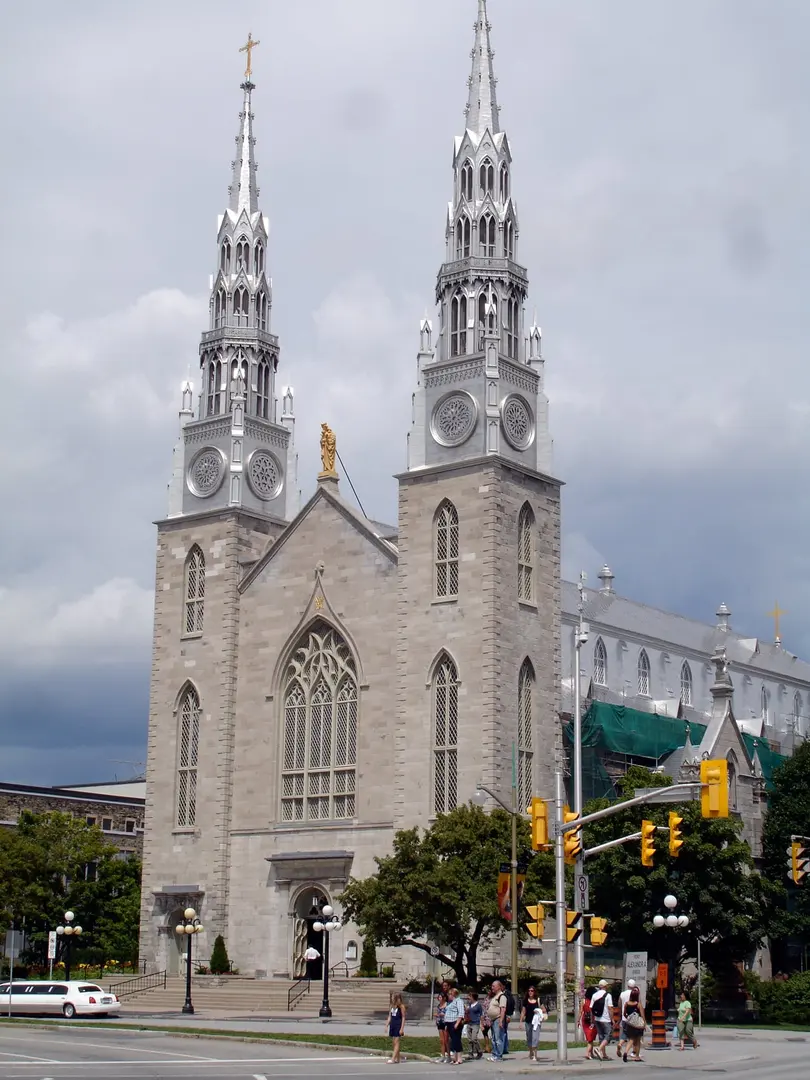
    The Notre-Dame Cathedral Basilica on Sussex Drive is Ottawa's oldest church and the seat of the Roman Catholic Archdiocese of Ottawa-Cornwall. Completed in 1846, the building is distinguished by its twin-tower facade, whose spires are clad in silver metal in the Eastern Canadian tradition. Between the towers, a gilded Madonna statue stands on the roofline of the nave. Located next to the National Gallery of Canada, the basilica was designated a National Historic Site of Canada in 1990.

  • St. Patrick's Basilica Ottawa

    St. Patrick's Basilica Ottawa

    Ottawa

    architecture

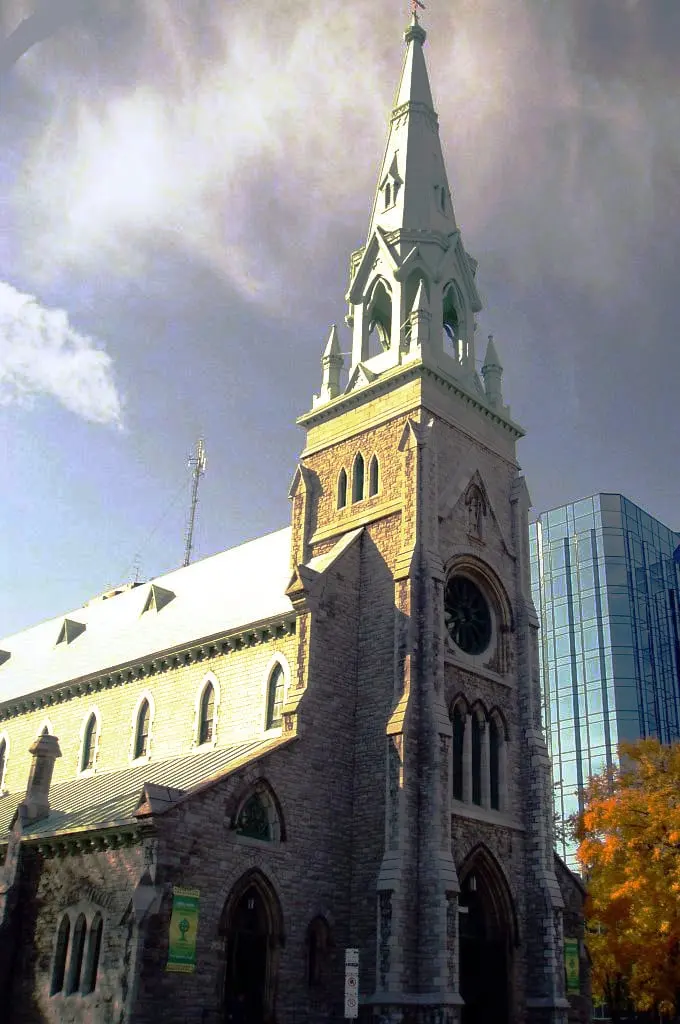
    St. Patrick's Basilica on Nepean Street is the oldest church in Ottawa serving the English-speaking community, and holds the rank of minor basilica within the Archdiocese of Ottawa-Cornwall. Dedicated to Ireland's patron saint, the neo-Gothic building reflects the significant role Irish immigrants played in shaping early Ottawa. Its soaring interior with stained glass carries a calm, ceremonial atmosphere. The basilica is a regular stop on Doors Open Ottawa, the city's annual architectural heritage day.

  • Cape North Lighthouse

    Cape North Lighthouse

    Ottawa

    architecturecultureknowledge

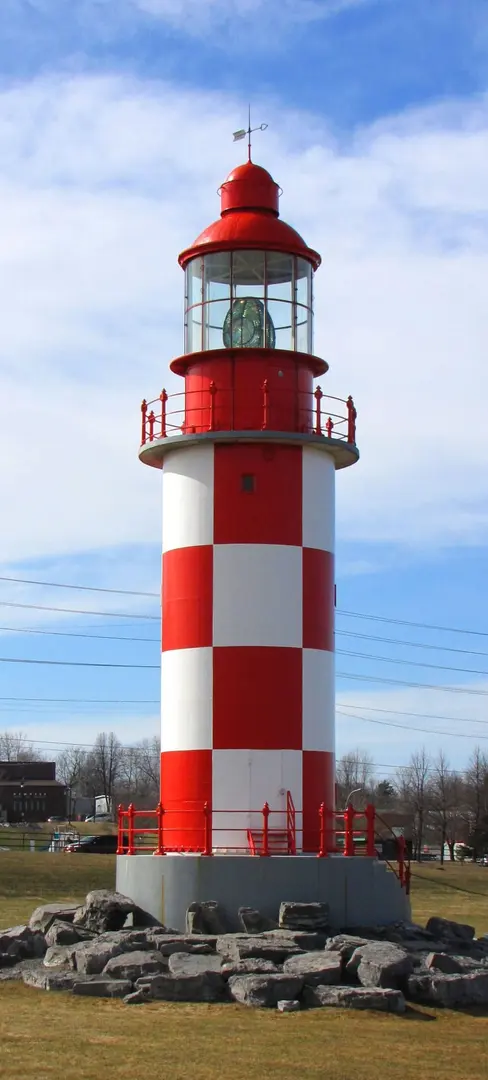
    The Cape North Lighthouse is a cylindrical tower with a distinctive red and white checkerboard pattern that served mariners from Money Point near Cape North, Cape Breton from 1908 to 1980. Originally installed at Cape Race, Newfoundland, the tower was relocated twice in its lifetime. What makes this lighthouse unusual is that it ended up landlocked: today it stands indoors at the Canada Science and Technology Museum in Ottawa, Ontario, preserved as a piece of Canadian maritime heritage far from the sea. Visitors can see the full tower up close inside the museum.

Keep exploring

These places are just the beginning.

Rate places with a swipe — TravelType learns from your tags what you love and curates your own map. Private until you choose to share.

Create your profile