Admiralteyskaya
Saint Petersburg
architecturehistoryfamily outings+2
local gems
Beyond the well-trodden routes, Saint Petersburg offers a quieter, more local side worth exploring. The Kuznechny Market, Maltsevsky Market, and Sytny Market are lively everyday spots where residents shop for fresh produce and regional goods. Bridges such as the Blagoveshchensky Bridge, the Blue Bridge, and the Exchange Bridge each lend a distinct character to the city's network of waterways. The Baltic Station serves as a busy transit hub connecting the city to its surroundings, while the Western Rapid Diameter represents a more recent layer of urban infrastructure. Further afield, the Alexander Palace, Catherine Palace, Trinity Cathedral, and the Cathedral of Saints Peter and Paul offer a calmer alternative to the city's busiest sights.
10 places · Saint Petersburg, Russia · Editorially curated
Saint Petersburg
Saint Petersburg
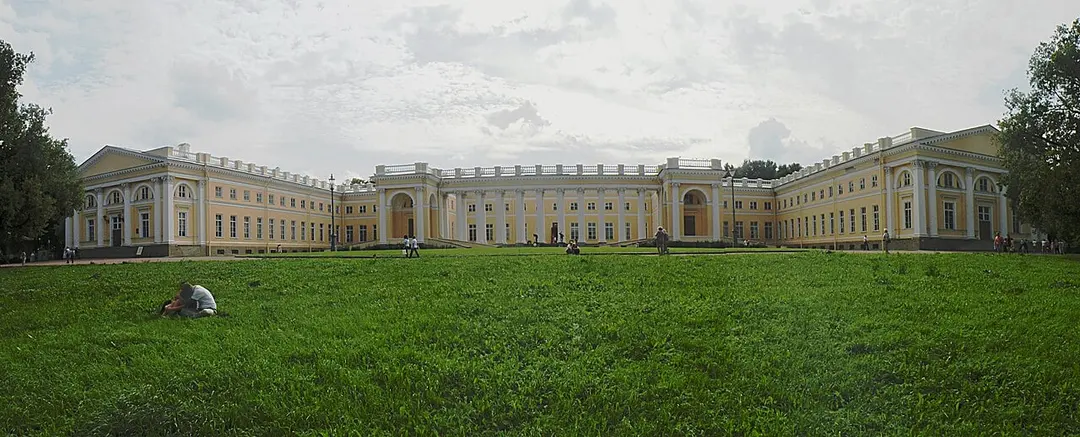
The Alexander Palace at Tsarskoye Selo was the favoured residence of the last Russian Tsar Nicholas II and his family. Built 1792-1796 by Giacomo Quarenghi for Catherine the Great in neoclassical style, it is distinguished by a colonnade of ten Corinthian columns before the honour court. Nicholas II governed from here, and the family lived under house arrest in the palace after the February Revolution of 1917 before being deported to Siberia. Following extensive restoration, the palace reopened to visitors in 2024.
Saint Petersburg
Saint Petersburg
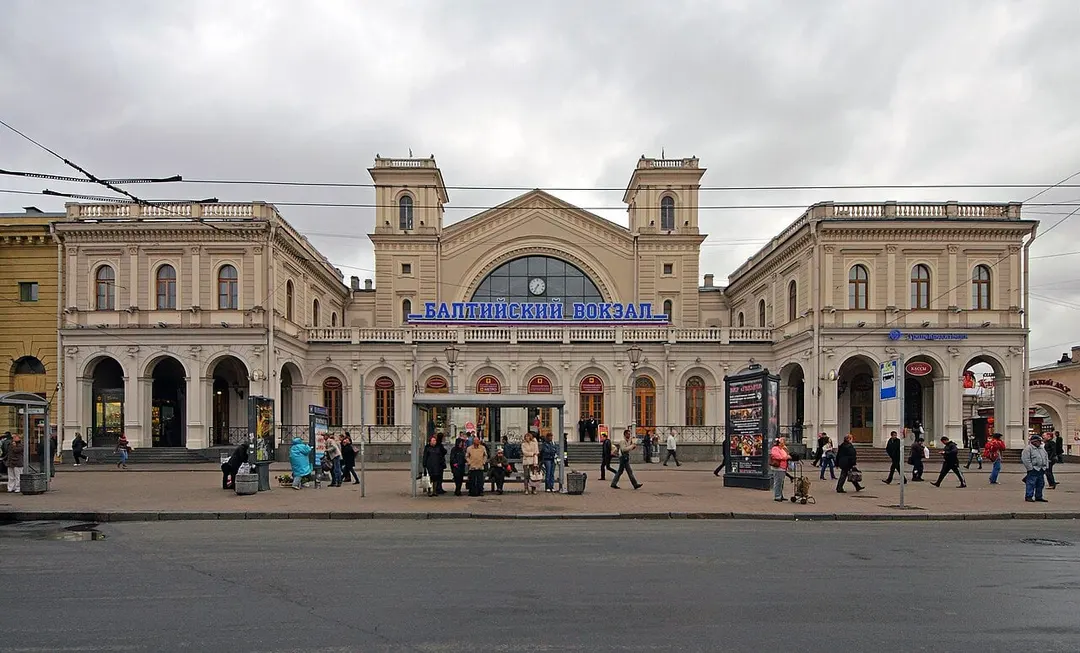
The Baltic Station, opened in 1857, is one of five major terminus stations in Saint Petersburg. Its name reflects its historical role as the departure point for the Baltic provinces of the Russian Empire. The classical facade is typical of 19th-century Russian railway architecture, projecting imperial confidence in brick and stone. Today it is primarily a commuter hub, serving suburban lines south of the city including trains to Peterhof and Oranienbaum, making it the most practical station for travellers heading to the famous palace gardens outside the city. Less visited than the grand central stations, it retains a workaday authenticity.
Saint Petersburg
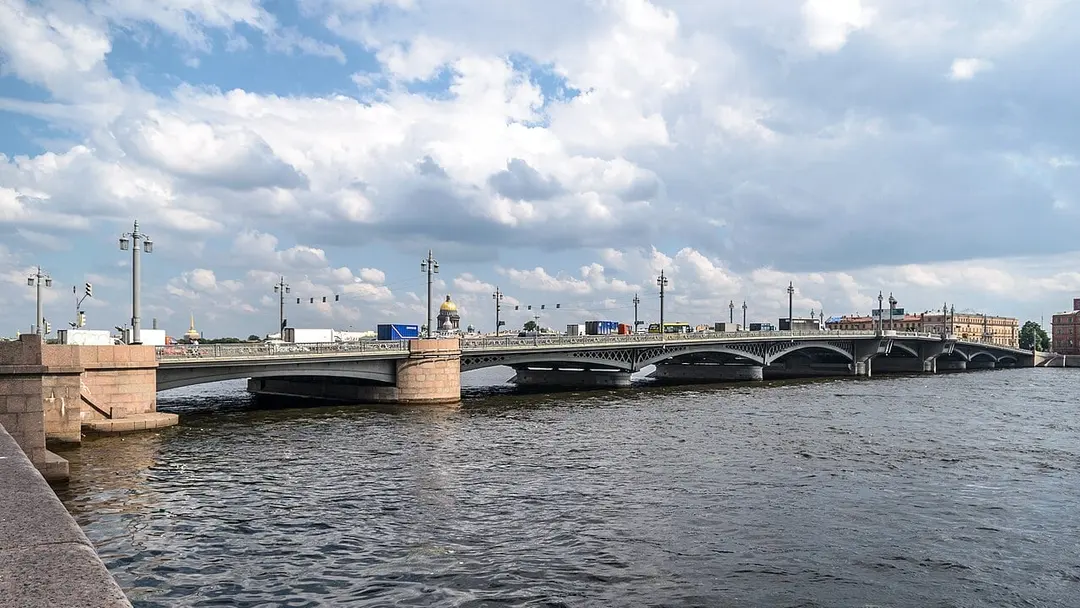
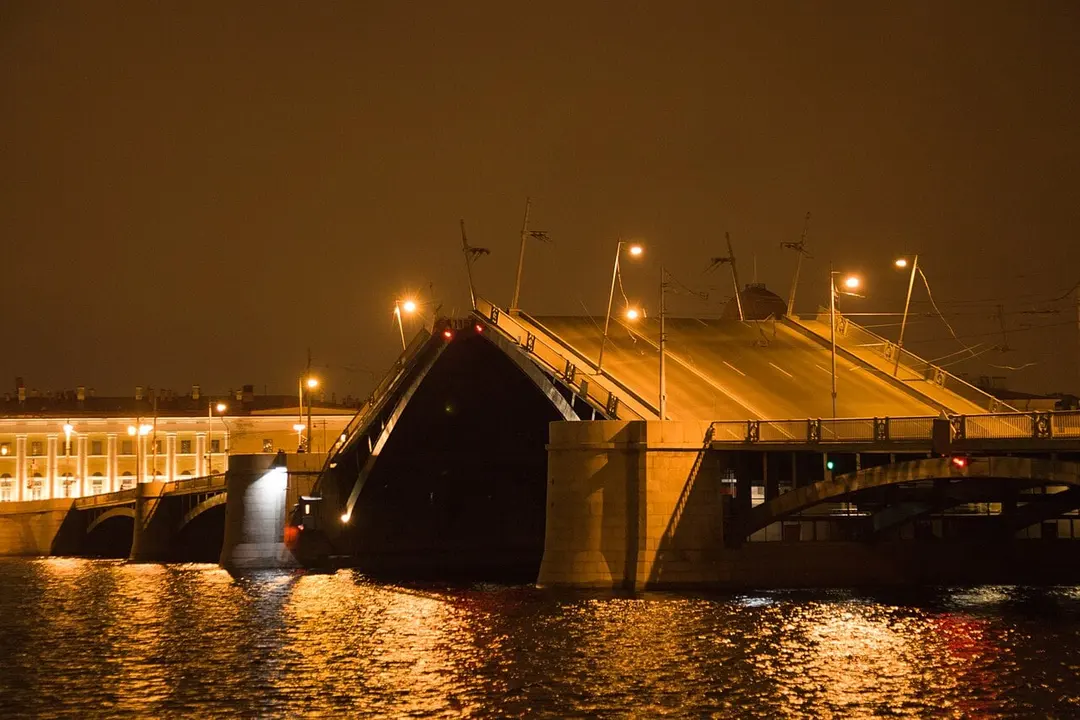
The Blagoveshchensky Bridge — also known as the Lieutenant Schmidt Bridge — crosses the Neva River in St. Petersburg, connecting Vasilievsky Island to the Admiralty District. Opened in 1850, it was the first permanent bridge across the Neva, replacing the temporary pontoon bridges that had previously linked the city's districts. Its cast-iron arches are considered a masterpiece of 19th-century Russian engineering. Like all the major Neva bridges, it opens during the White Nights each summer to allow river traffic to pass — a nightly spectacle that draws thousands of onlookers to the banks. The bridge has been restored several times and retains its historic character to this day.
Saint Petersburg
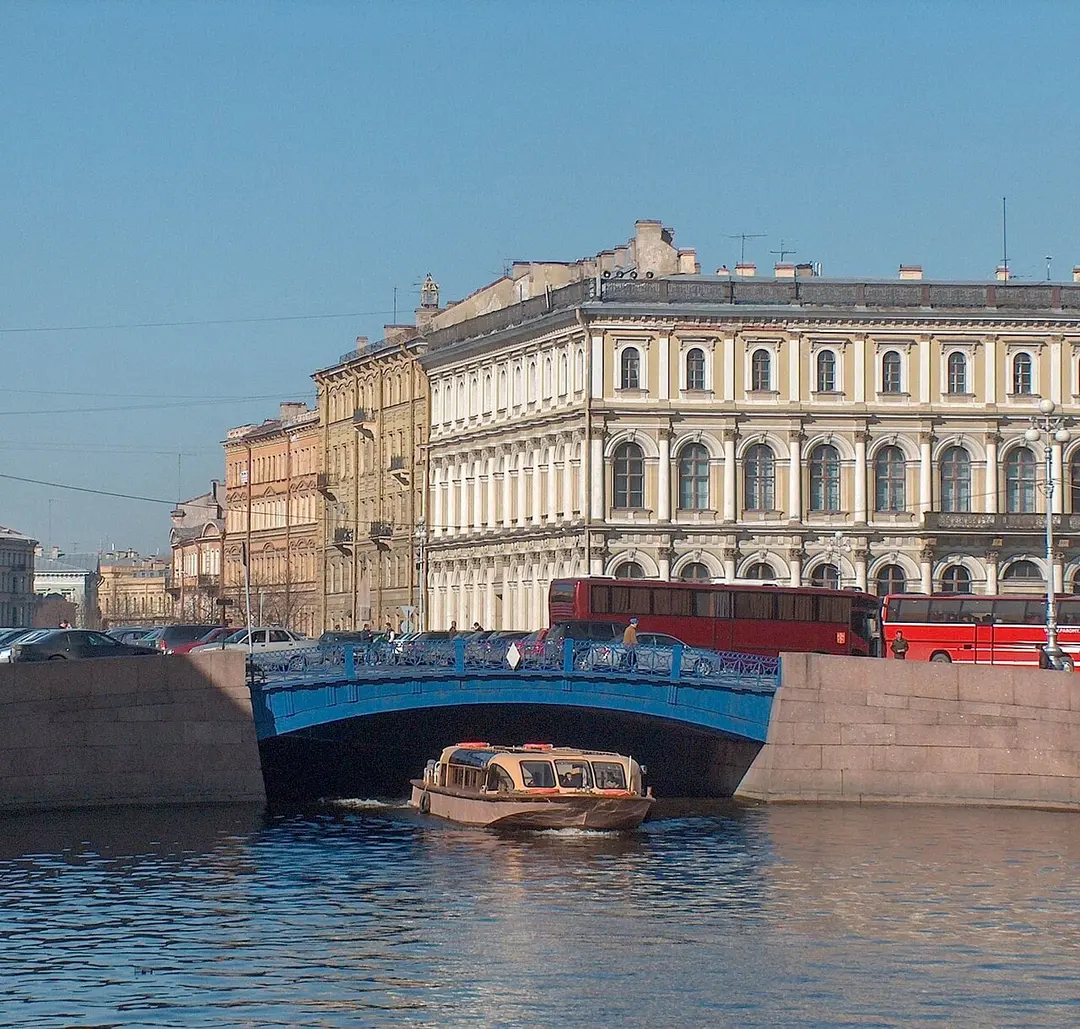
The Blue Bridge over the Moika River in Saint Petersburg is one of the city's most remarkable structures: at nearly 100 metres wide, it is the broadest bridge in the entire city and looks more like a wide square than a bridge when viewed from a distance. Its name comes from the blue paint that distinguishes it from the neighbouring coloured bridges over the Moika — together with the Red, Yellow, and Green bridges, it forms the group known as the "Colour Bridges." The reinforced concrete structure connects Isaakievskaya Square with the far bank and offers a fine view of Saint Isaac's Cathedral. Today it is a popular meeting point and a highlight of the classic inner-city walking route.
Saint Petersburg
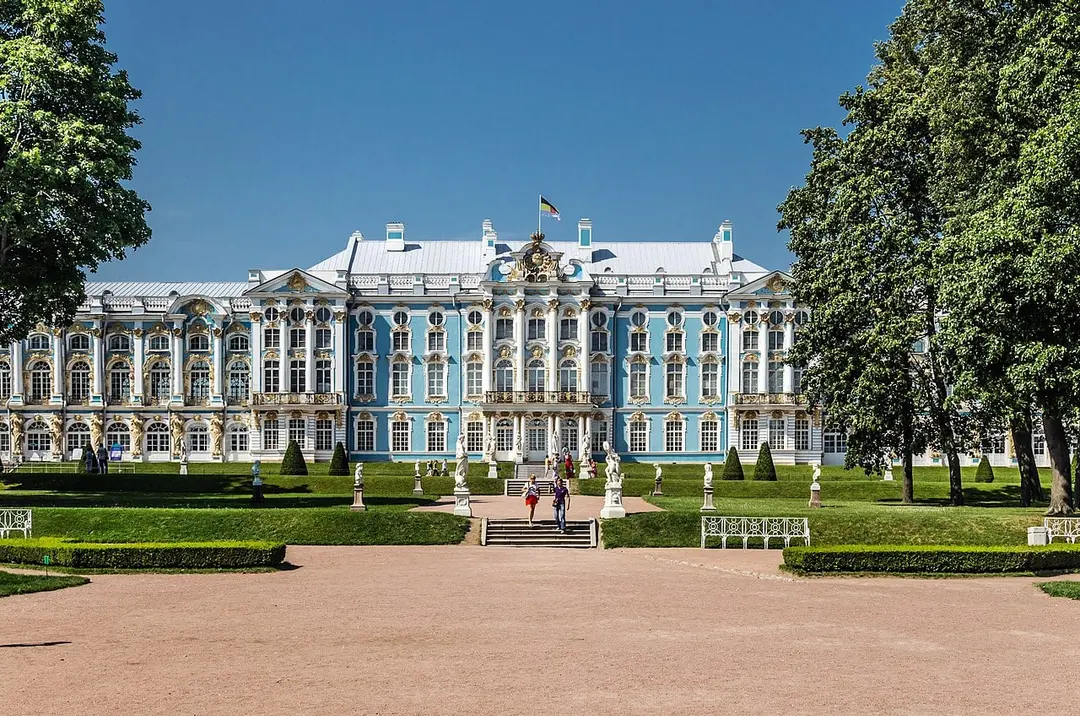
The Catherine Palace is a magnificent Baroque residence in Tsarskoye Selo (Pushkin), around 25 kilometres south of St. Petersburg. Built between 1748 and 1756 for Empress Elizabeth to designs by architect Bartolomeo Rastrelli, it is considered a masterpiece of Russian Rococo. Its most famous highlight is the Amber Room – a state chamber lined entirely with amber panels, looted during World War II and painstakingly reconstructed in the 1990s. Since 1990, the palace has been part of the UNESCO World Heritage Site.
Saint Petersburg
The Exchange Bridge spans the Little Neva in St. Petersburg, linking the eastern tip of Vasilyevsky Island — the famous Strelka with its Stock Exchange and Rostral Columns — to Petrograd Island. At 239 metres long and 27 metres wide, it is one of the city's most striking crossings. Originally built as a wooden bridge in 1896, it was replaced mid-20th century by a modern reinforced-concrete structure that still respects the city's classicist skyline. Walking across it offers an unmatched view of the iconic Exchange rotunda and the gilded spire of the Peter and Paul Fortress.
Saint Petersburg
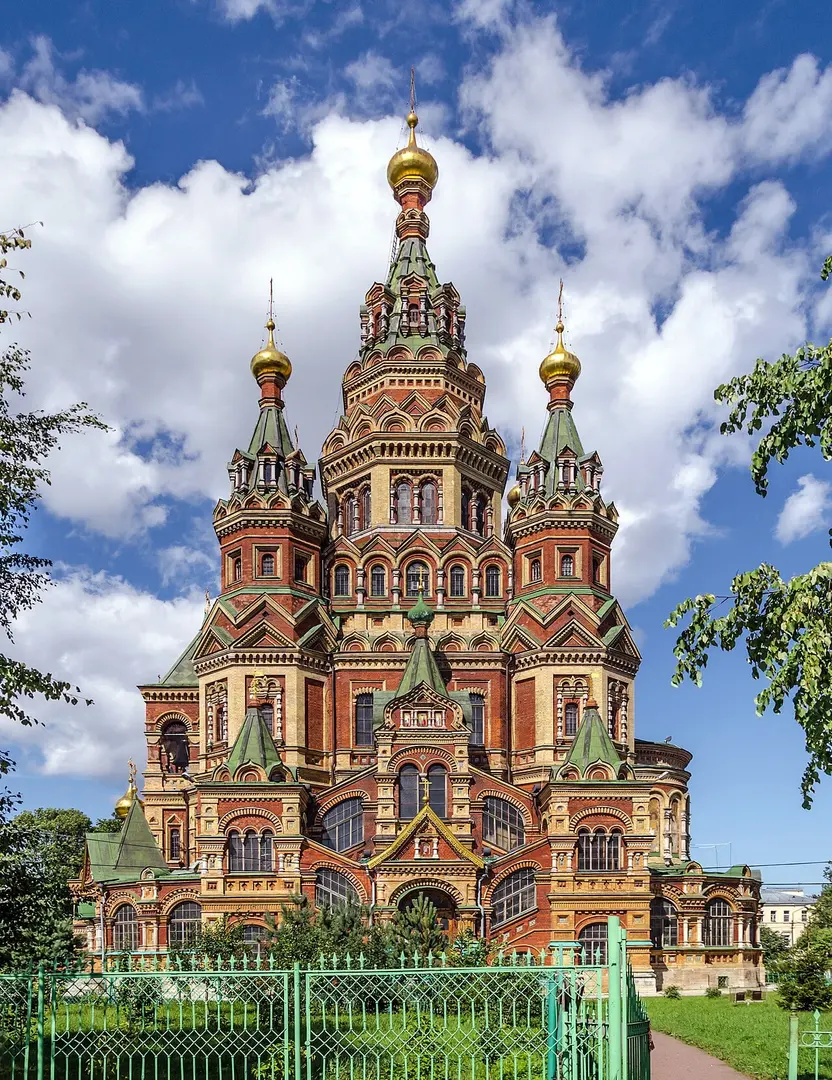
The Peter and Paul Cathedral in Peterhof is a Russian Orthodox cathedral built between 1894 and 1904 in the Russian-Byzantine style. Standing approximately 70 metres tall, it ranks among the highest Orthodox sacred buildings in the world. The structure is located close to the famous Peterhof Palace complex and was listed as a national cultural monument of Russia in 1975. The five-domed church with its gilded onion towers and richly decorated interior attracts pilgrims and art lovers alike. Today the cathedral is once again in active use as a place of worship.
Saint Petersburg
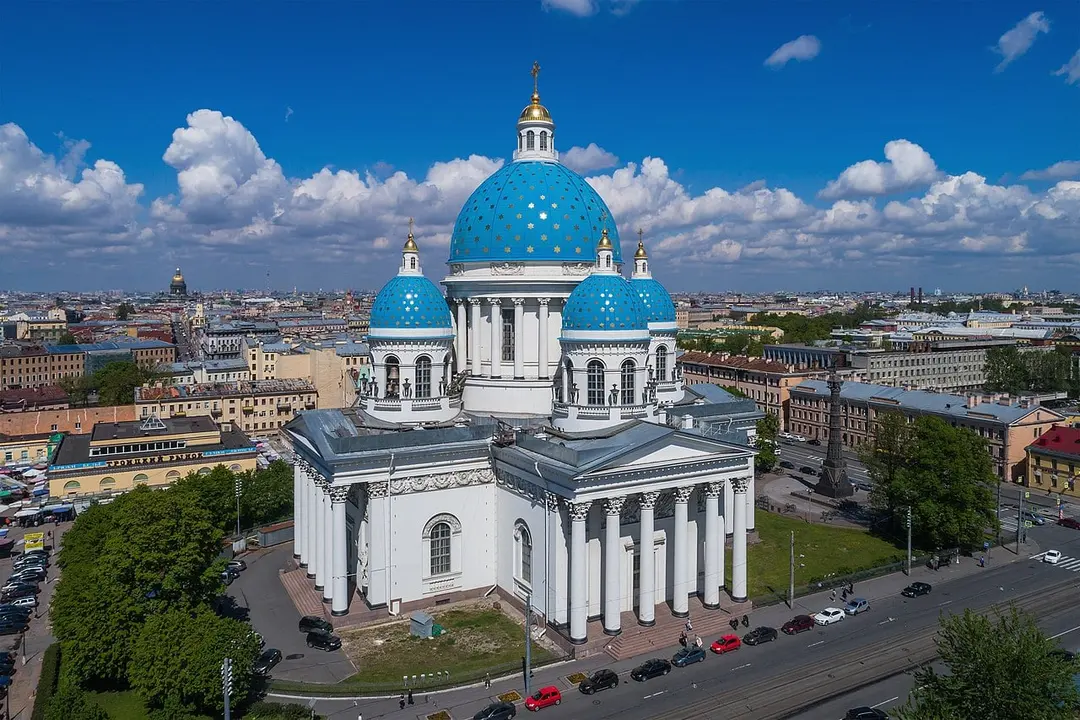
The Trinity Cathedral — also known as the Izmailovsky Cathedral — is one of the most imposing Russian Orthodox cathedrals in St. Petersburg and among the city's most visually distinctive buildings. Built between 1828 and 1835 in the Russian Classicist style, it was originally constructed as the garrison church of the Izmailovsky Guards Regiment of the Imperial Army. Its striking pale-blue body topped by five blue domes studded with gold stars makes it immediately recognisable. Secularised and used as a warehouse during the Soviet era, the cathedral was returned to the church in the 1990s and gradually restored. Today it is an active parish church and draws visitors who seek out Imperial-era St. Petersburg beyond the main tourist trail.
Keep exploring
Rate places with a swipe — TravelType learns from your tags what you love and curates your own map. Private until you choose to share.