TravelType

history

History in Saint Petersburg

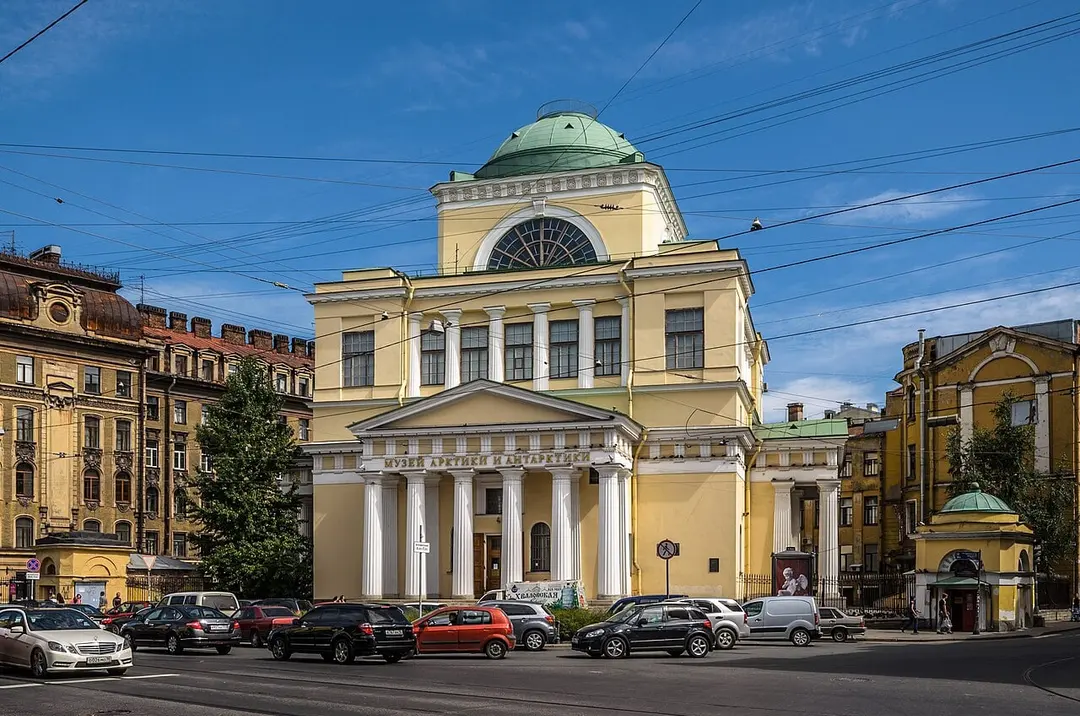
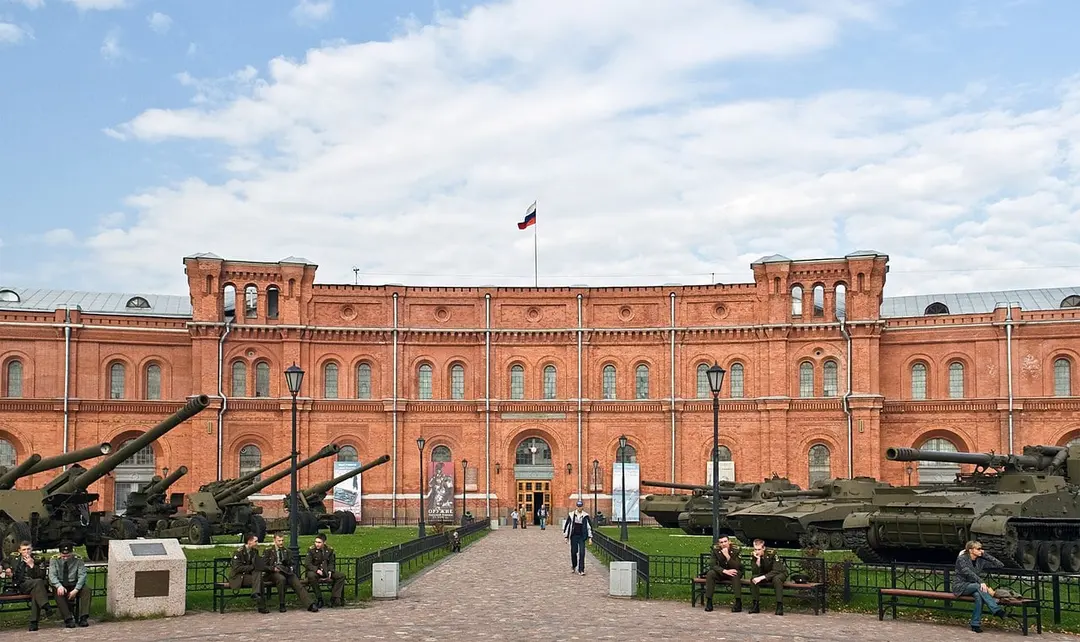
Saint Petersburg, founded as an imperial Russian capital in the early eighteenth century, holds its history in remarkable concentration. The Admiralty and the Alexander Column anchor the city's imperial past, while the Alexander Nevsky Lavra stands as a major monastic and burial complex spanning centuries of Russian history. The Amber Room and Anichkov Palace open a window onto tsarist court life, and the Artillery Museum — with pieces such as the 2A36 Giatsint-B field gun and the 85mm anti-aircraft gun 52-K — traces Russia's military heritage. The Arctic and Antarctic Museum adds another layer to this historically layered city.

45 places · Saint Petersburg, Russia · Editorially curated

  • 2A36 Giatsint-B Field Gun

    2A36 Giatsint-B Field Gun

    Saint Petersburg

    cultureknowledge

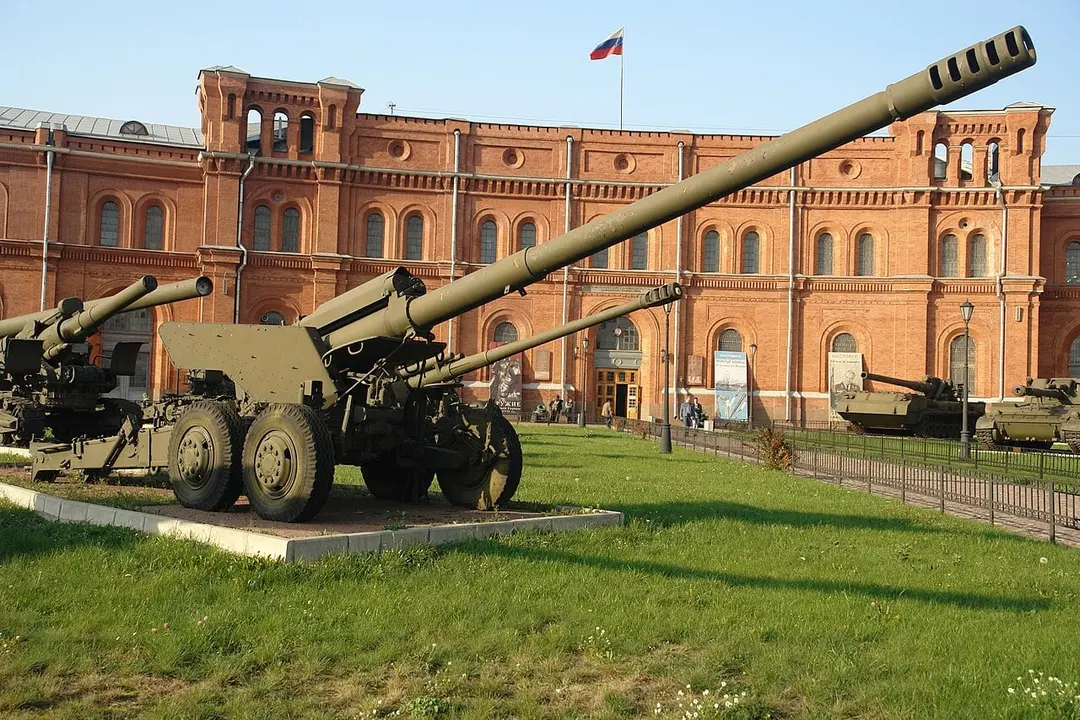
    The 2A36 Giatsint-B is a Soviet towed 152mm field gun that entered service in 1976. At its introduction it had the longest effective range of any Soviet field gun, earning NATO attention as M1976. The St. Petersburg exhibit illustrates Cold War-era artillery development at scale.
  • 85mm Anti-Aircraft Gun 52-K

    85mm Anti-Aircraft Gun 52-K

    Saint Petersburg

    cultureknowledge

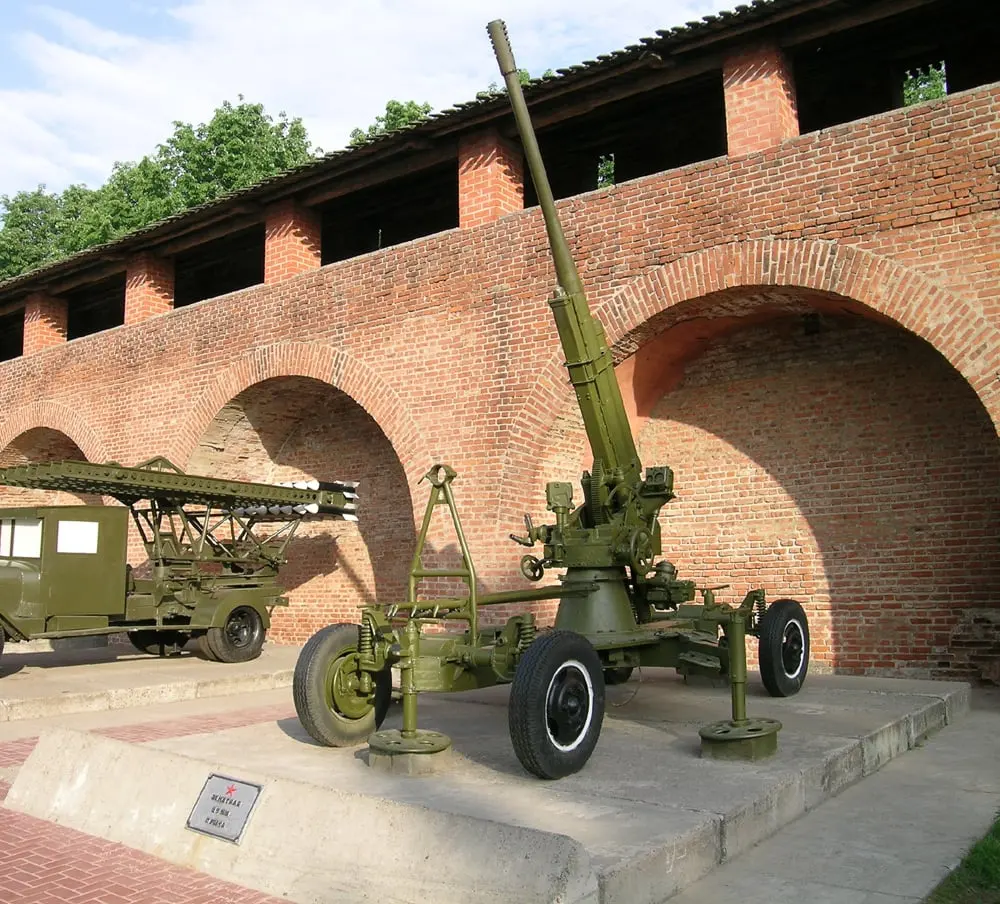
    The Soviet 85mm anti-aircraft gun M1939 (52-K) was the Red Army's heavy AA weapon in World War II, capable of engaging targets at altitudes up to 10 kilometres. Like Germany's 88mm Flak, it was also used in an anti-tank role with devastating effect. The gun's 85mm calibre directly inspired the tank gun later fitted to the T-34/85. The St. Petersburg exhibit illustrates the robust pragmatism of Soviet wartime artillery design.

  • Academic Chapel

    Academic Chapel

    Saint Petersburg

    architecturecultureknowledge

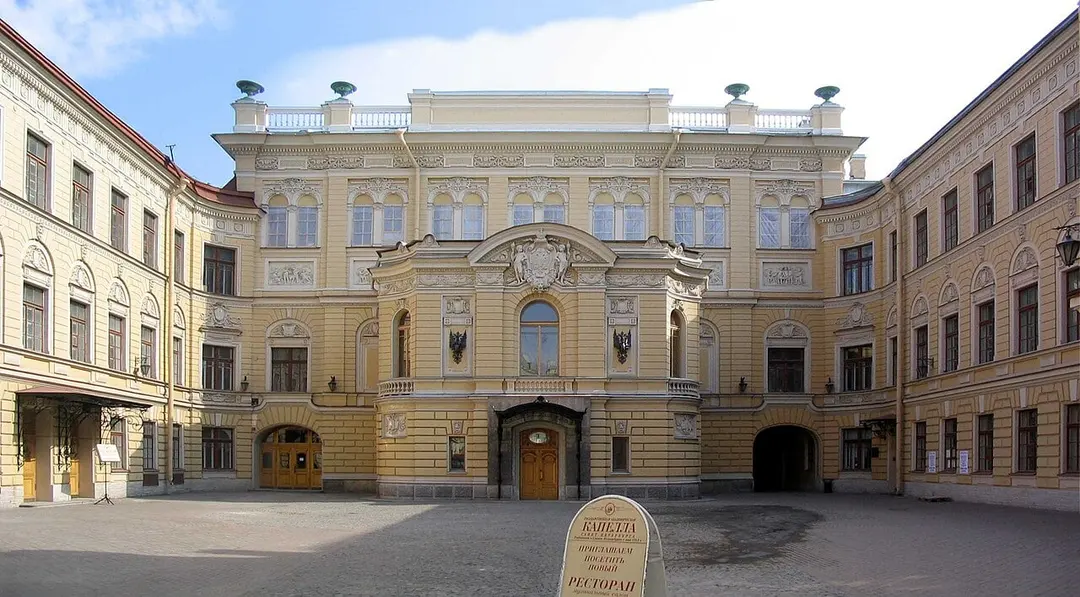
    The St. Petersburg State Academic Capella — the Glinka Capella — is Russia's oldest professional music institution, its history tracing to 1479 as the Tsar's court choir. Under the Romanov dynasty it became the Imperial Court Chapel and trained generations of Russian musicians. Today it operates as a prestigious concert hall on the Moika River embankment in central St. Petersburg, home to one of Russia's finest chamber choirs.

  • Admiralty

    Admiralty

    Saint Petersburg

    architectureculture

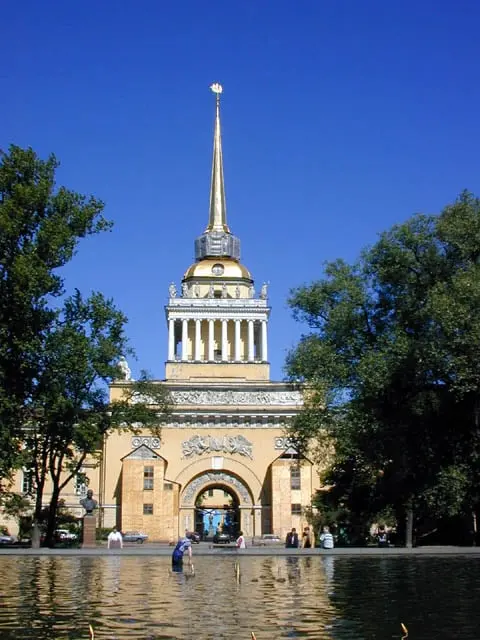
    The Admiralty's golden spire is St. Petersburg's most visible landmark — and the deliberate focal point from which the city's three main thoroughfares radiate: Nevsky Prospect, Gorokhovaya Street, and Voznesensky Avenue. Built in Empire style on the site of the shipyard Peter the Great founded in 1704, the building today houses the headquarters of the Russian Navy. The spire's ship weathervane and the Bronze Horseman equestrian statue nearby are among the city's most enduring symbols.

  • Alexander Column

    Alexander Column

    Saint Petersburg

    architectureculture

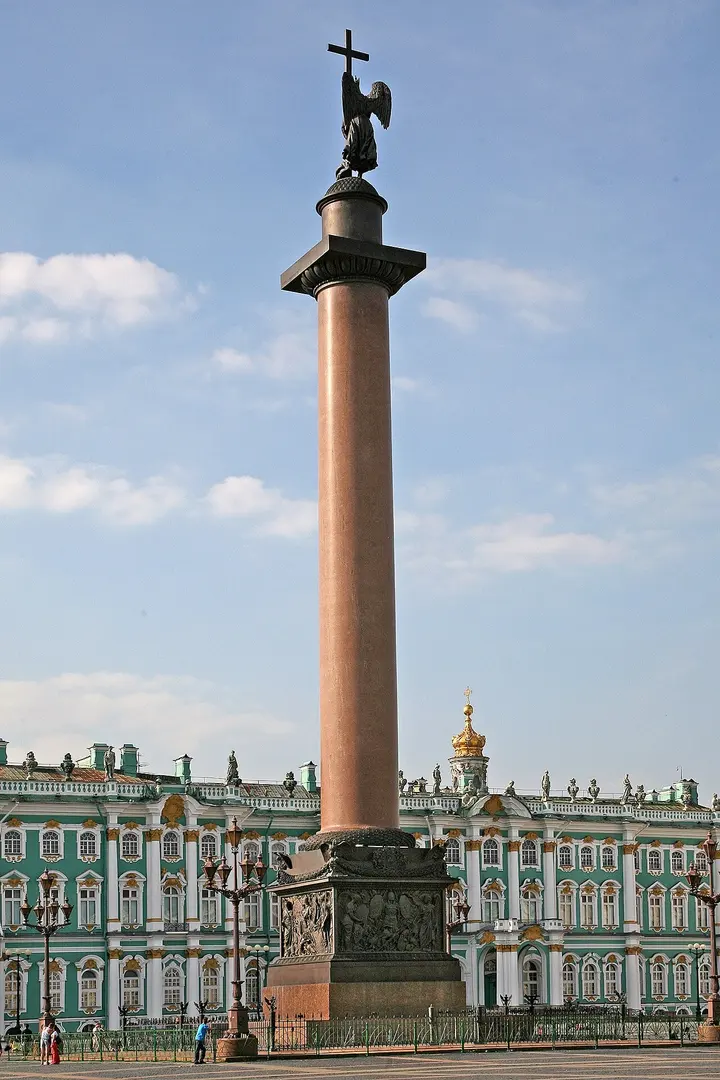
    The Alexander Column is the centrepiece of Palace Square in St. Petersburg and the world's tallest freestanding granite column monument. Erected in 1834 to commemorate Russia's victory over Napoleon, it is named after Tsar Alexander I. The 600-tonne granite monolith stands without any foundation, held in place solely by its own weight. The angel atop the column is said to bear the facial features of Alexander I.

  • Alexander Nevsky Bridge

    Alexander Nevsky Bridge

    Saint Petersburg

    architectureculturenature

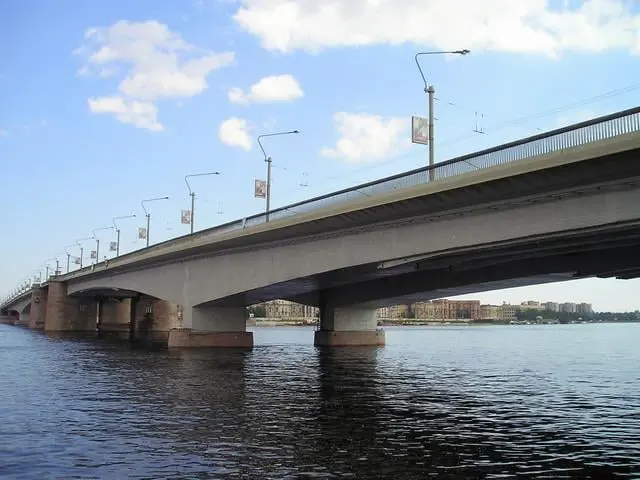
    The Alexander Nevsky Bridge crosses the Neva in St. Petersburg, linking Alexander Nevsky Square with Zanevsky Prospect. At 906 metres, it was the longest bridge across the Neva until the Big Obukhovsky Bridge opened in 2004. Built in 1965 and named after the medieval prince Alexander Nevsky who defeated the Swedes nearby in 1240, it is one of the city's major bascule bridges, raised during summer nights to allow shipping.

  • Alexander Nevsky Lavra

    Alexander Nevsky Lavra

    Saint Petersburg

    architectureculturenature+1

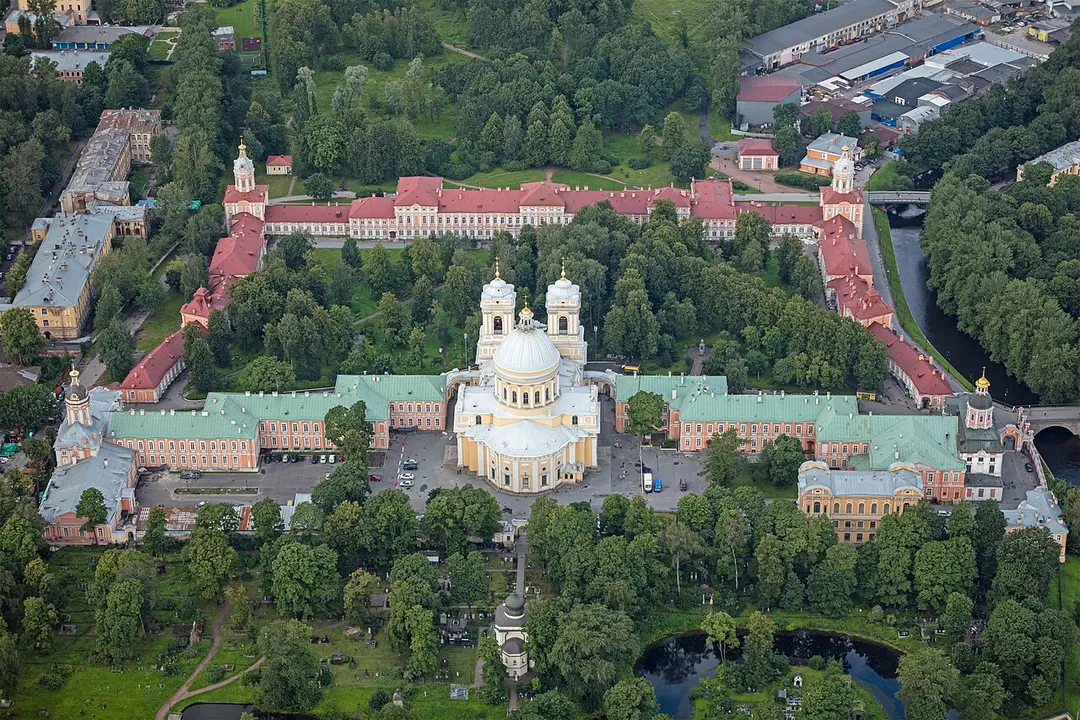
    Alexander Nevsky Lavra is St. Petersburg's most significant religious institution, holding the highest rank in Russian Orthodox monasticism — only four monasteries worldwide bear the lavra designation. Founded by Peter the Great in 1710 at the eastern end of Nevsky Prospekt, it houses the relics of the national saint Alexander Nevsky. The Tikhvin and Lazarus cemeteries within the complex contain the graves of Tchaikovsky, Dostoyevsky, Rimsky-Korsakov, and other luminaries of Russian culture.

  • Alexander Palace

    Alexander Palace

    Saint Petersburg

    architectureculturelocal gems

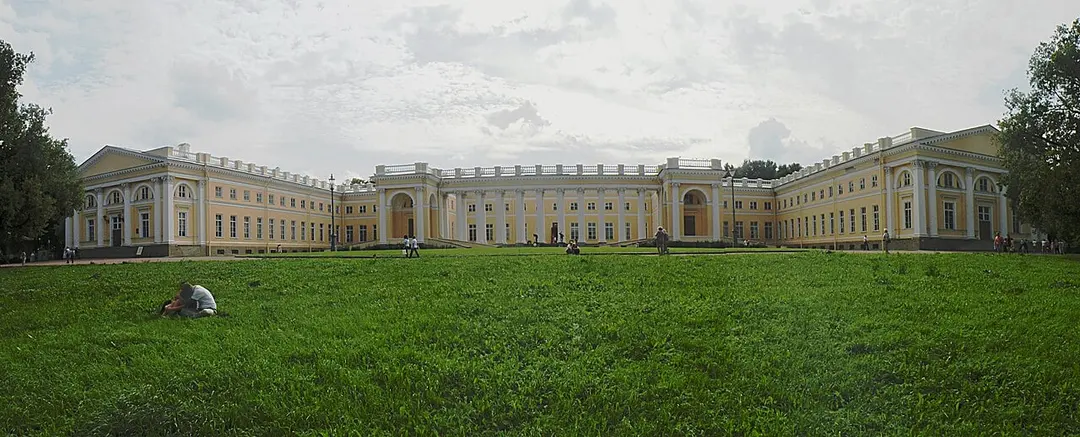
    The Alexander Palace at Tsarskoye Selo was the favoured residence of the last Russian Tsar Nicholas II and his family. Built 1792-1796 by Giacomo Quarenghi for Catherine the Great in neoclassical style, it is distinguished by a colonnade of ten Corinthian columns before the honour court. Nicholas II governed from here, and the family lived under house arrest in the palace after the February Revolution of 1917 before being deported to Siberia. Following extensive restoration, the palace reopened to visitors in 2024.

  • Amber Room

    Amber Room

    Saint Petersburg

    architectureculture

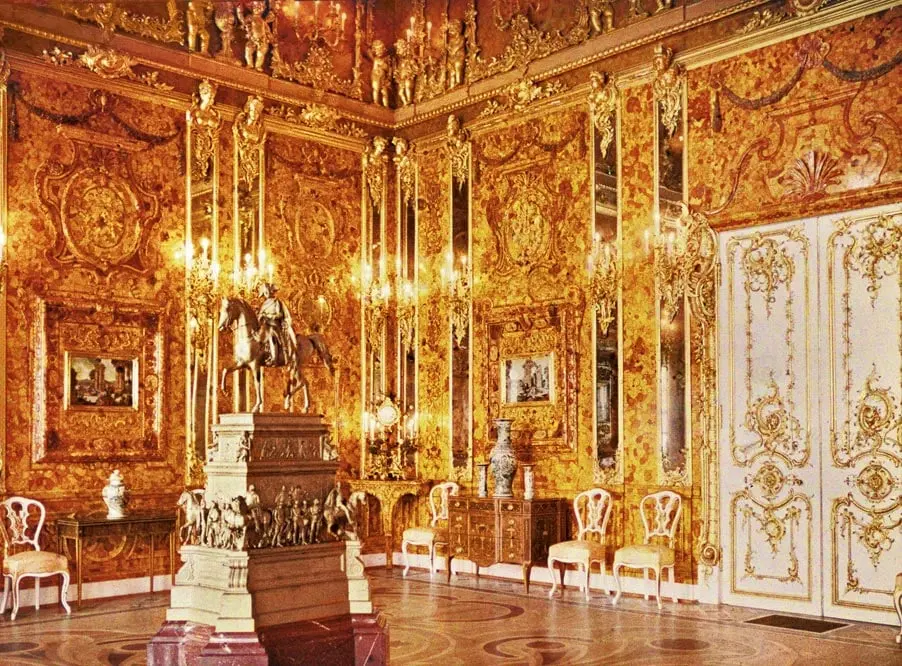
    The Amber Room is one of history's most celebrated lost treasures — and one of its most ambitious reconstructions. Created between 1701 and 1712 for the Prussian King Frederick I, master craftsmen lined the walls with over six tonnes of amber panels, gilded carvings, and mirrors. Frederick William I gifted it to Tsar Peter I in 1716; Empress Elizabeth later had it enlarged and installed in the Catherine Palace at Tsarskoye Selo. In 1941, German forces looted the room during their advance; its whereabouts have never been established. A painstaking reconstruction, completed in 2003 after 25 years of work, now occupies the same space in the Catherine Palace outside St. Petersburg — a dazzling testament to both 18th-century craftsmanship and modern restoration skills.

  • Anichkov Palace

    Anichkov Palace

    Saint Petersburg

    architectureculturenature

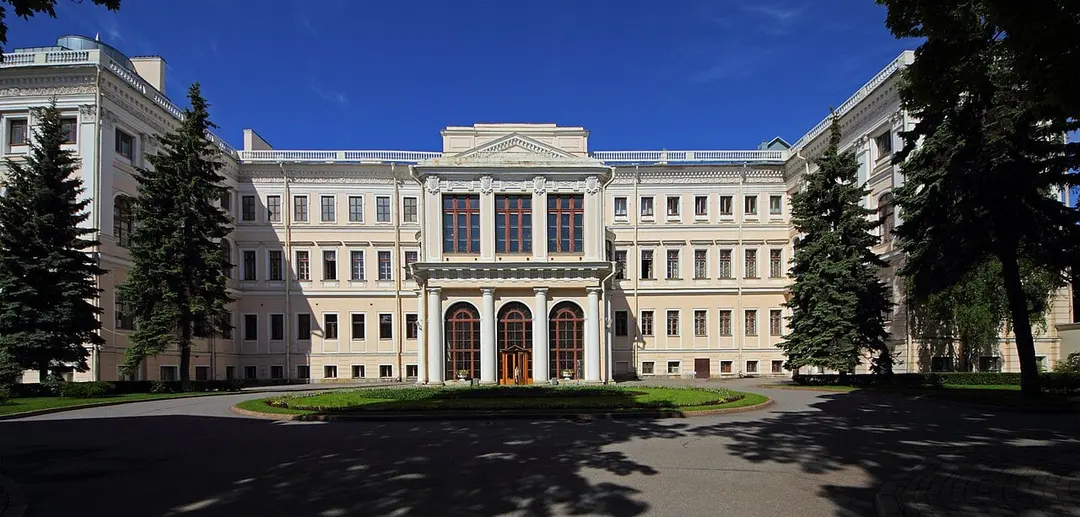
    The Anichkov Palace on Nevsky Prospect is one of St. Petersburg's oldest and most historically resonant palaces, built in 1754 under Empress Elizabeth. Originally Baroque, it received its neoclassical form at the end of the 18th century. Multiple Russian rulers gifted and inhabited it — Nicholas I presented it to his wife as a Christmas gift, and Nicholas II spent his childhood here. Today it houses the Palace of Youth Creativity.

  • Arctic and Antarctic Museum

    Arctic and Antarctic Museum

    Saint Petersburg

    architecturenatureknowledge

    The Arctic and Antarctic Museum in St. Petersburg is the world's largest museum dedicated to polar exploration. Housed in a former Orthodox church repurposed in 1930 and opened in January 1937, its collection covers expedition equipment, maps, ship models, and documents Soviet pioneering achievements in Arctic and Antarctic exploration.

  • Artillery Museum

    Artillery Museum

    Saint Petersburg

    cultureknowledge

    The Artillery Museum in St. Petersburg is Russia's oldest military museum, founded by Peter the Great in 1703. Located in the Kronwerk fortification opposite the Peter and Paul Fortress, its collection includes over 850 artillery pieces spanning the 14th century to the present, plus military technology, uniforms, and maps. It is one of the world's most significant museums of its kind.

  • Aurora cruiser

    Aurora cruiser

    Saint Petersburg

    culturemystery

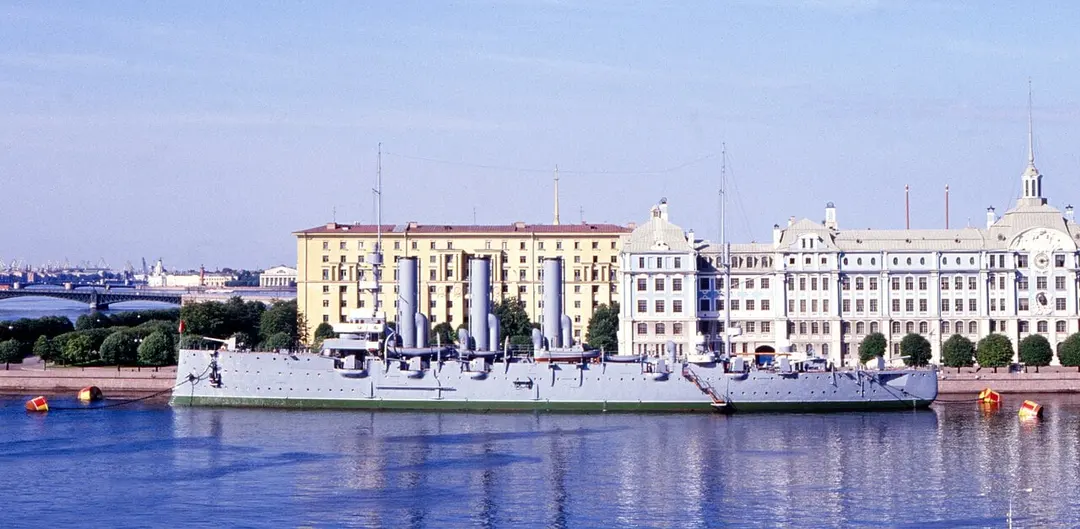
    The Cruiser Aurora is Russia's most famous museum ship and a symbol of the October Revolution. On 25 October 1917 (old calendar), the Aurora fired the blank shot that signalled the storming of the Winter Palace. Built in 1900 for the Imperial Russian Navy, it survived the Battle of Tsushima in 1905. Since 1956 it has been permanently moored before the Nakhimov Naval Academy. Open to visitors as a floating museum.

  • Baltic Station Saint Petersburg

    Baltic Station Saint Petersburg

    Saint Petersburg

    architectureculturelocal gems

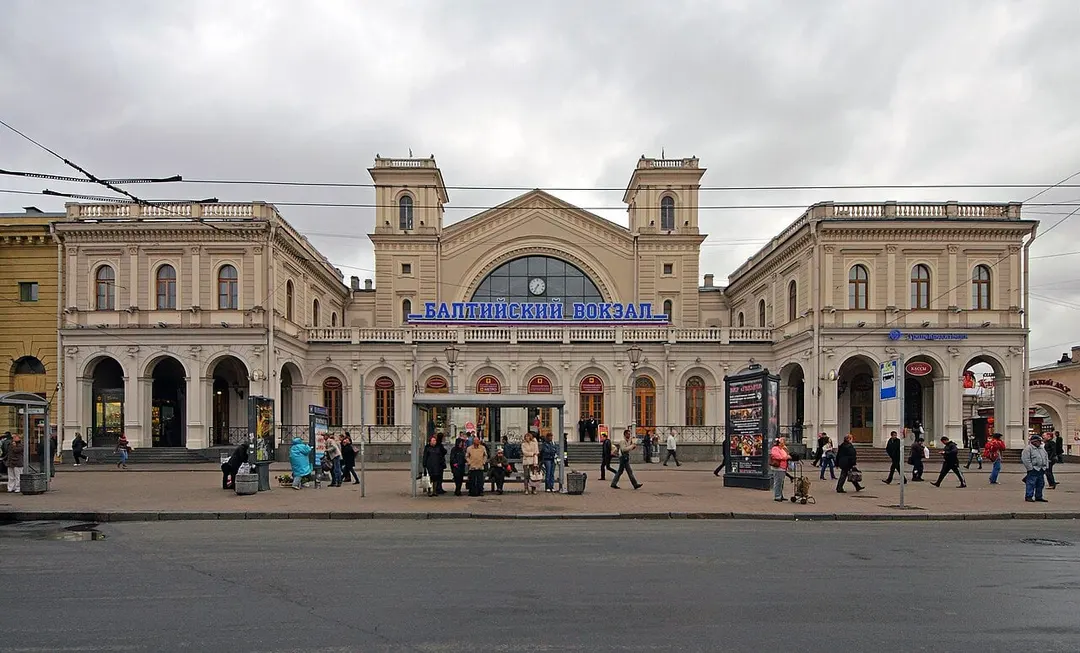
    The Baltic Station, opened in 1857, is one of five major terminus stations in Saint Petersburg. Its name reflects its historical role as the departure point for the Baltic provinces of the Russian Empire. The classical facade is typical of 19th-century Russian railway architecture, projecting imperial confidence in brick and stone. Today it is primarily a commuter hub, serving suburban lines south of the city including trains to Peterhof and Oranienbaum, making it the most practical station for travellers heading to the famous palace gardens outside the city. Less visited than the grand central stations, it retains a workaday authenticity.

  • Bank Bridge

    Bank Bridge

    Saint Petersburg

    architecturenature

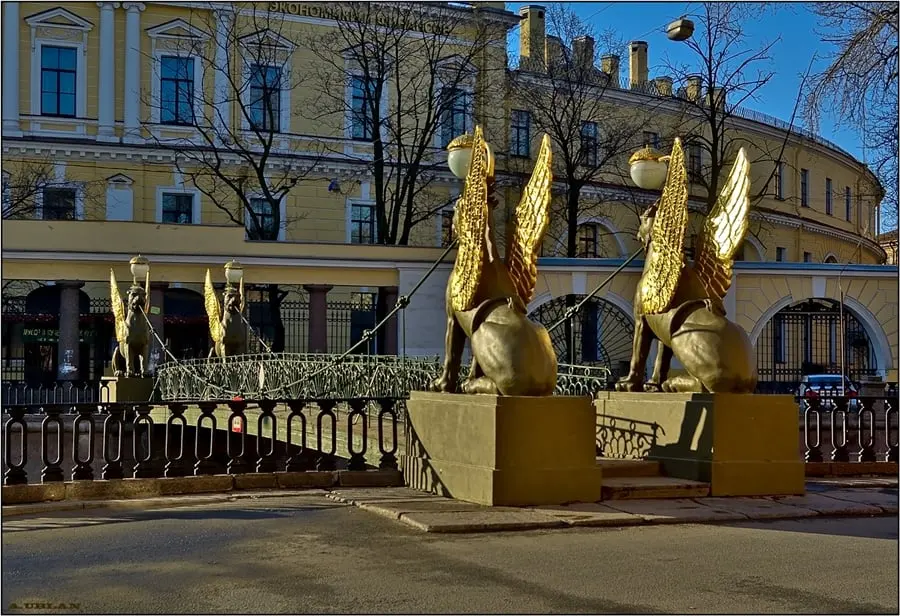
    The Bank Bridge is one of the most delightful small structures in Saint Petersburg. Completed in 1826 to a design by the Baden engineer Wilhelm von Traitteur, this 25-metre pedestrian chain bridge crosses the Gribojedov Canal near the Kazan Cathedral. Its defining feature is four gilded cast-iron griffins whose wings conceal the iron chains that support the bridge deck – an exquisite piece of Empire-style decorative engineering. The bridge sits at the heart of the historic centre, connecting the old banking quarter with the surrounding canal streets. Local tradition holds that touching the griffins brings good luck.

  • Beloselsky-Belozersky Palace

    Beloselsky-Belozersky Palace

    Saint Petersburg

    architecture

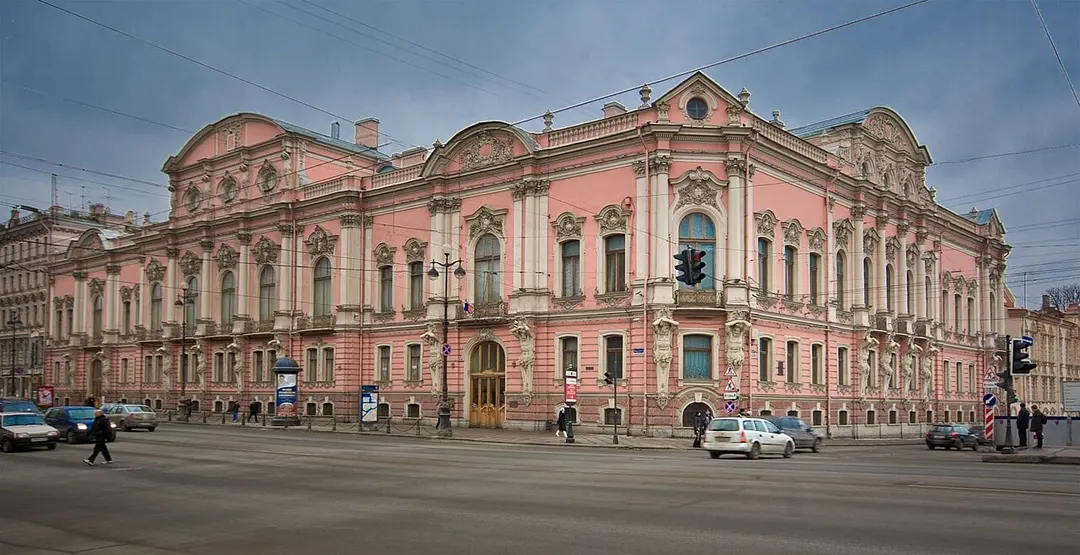
    The Beloselsky-Belozersky Palace occupies a prime corner where Nevsky Prospekt meets the Fontanka River in St. Petersburg. Originally built in the late 18th century, it was entirely remodelled in 1847–1848 by architect Andrei Stackenschneider in the neo-Baroque style, closely mirroring the Stroganov Palace at the other end of Nevsky. The deep red façade, sculpted atlantes, and exuberant ornamental detail make it one of the most theatrically decorative buildings in the city. The palace once belonged to Grand Duke Sergei Alexandrovich of Russia. Today it serves as a concert hall and cultural centre, hosting classical music performances and exhibitions that keep its grand rooms very much alive.

  • Blagoveshchensky Bridge

    Blagoveshchensky Bridge

    Saint Petersburg

    architecturelocal gems

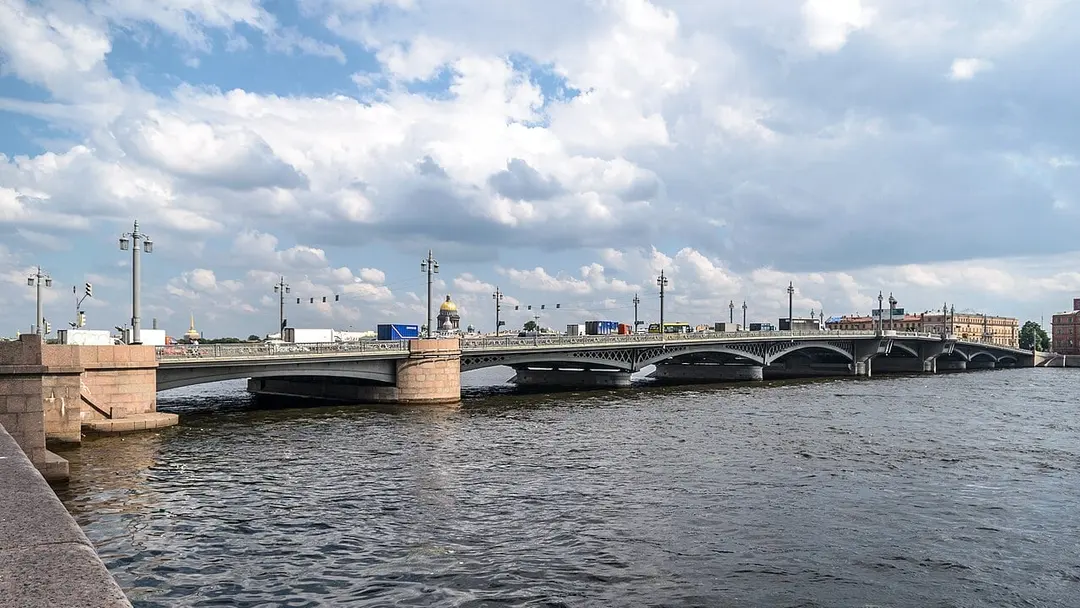
    The Blagoveshchensky Bridge — also known as the Lieutenant Schmidt Bridge — crosses the Neva River in St. Petersburg, connecting Vasilievsky Island to the Admiralty District. Opened in 1850, it was the first permanent bridge across the Neva, replacing the temporary pontoon bridges that had previously linked the city's districts. Its cast-iron arches are considered a masterpiece of 19th-century Russian engineering. Like all the major Neva bridges, it opens during the White Nights each summer to allow river traffic to pass — a nightly spectacle that draws thousands of onlookers to the banks. The bridge has been restored several times and retains its historic character to this day.

  • Blue Bridge

    Blue Bridge

    Saint Petersburg

    architectureculturenature+1

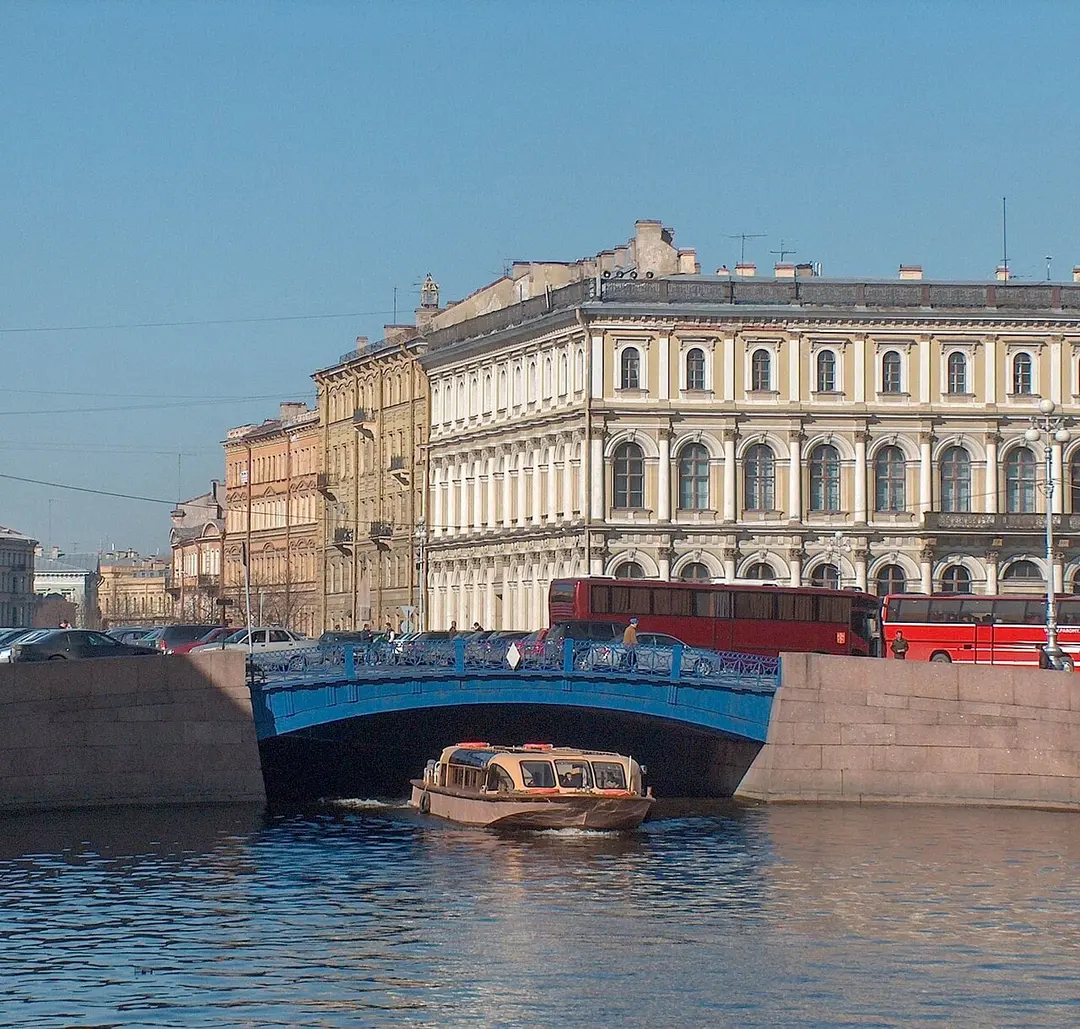
    The Blue Bridge over the Moika River in Saint Petersburg is one of the city's most remarkable structures: at nearly 100 metres wide, it is the broadest bridge in the entire city and looks more like a wide square than a bridge when viewed from a distance. Its name comes from the blue paint that distinguishes it from the neighbouring coloured bridges over the Moika — together with the Red, Yellow, and Green bridges, it forms the group known as the "Colour Bridges." The reinforced concrete structure connects Isaakievskaya Square with the far bank and offers a fine view of Saint Isaac's Cathedral. Today it is a popular meeting point and a highlight of the classic inner-city walking route.

  • Bogoslovskoe cemetery

    Bogoslovskoe cemetery

    Saint Petersburg

    nature

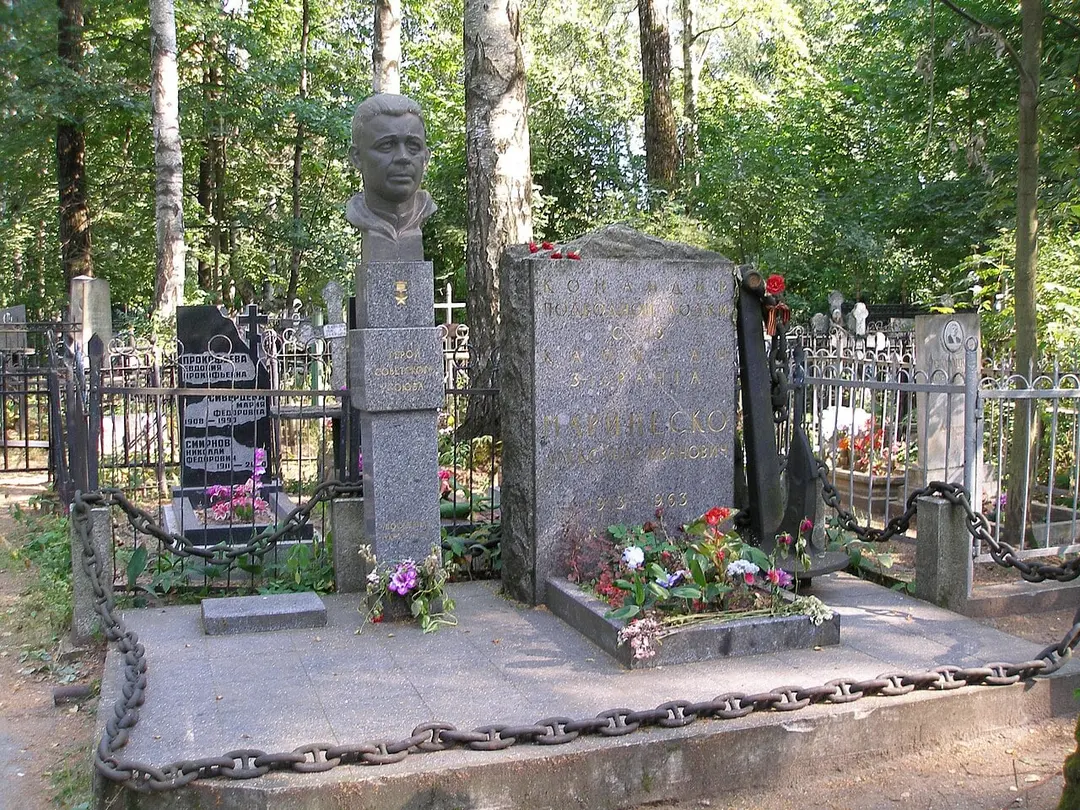
    Bogoslovskoye Cemetery is one of the oldest surviving cemeteries in St. Petersburg. Founded in 1701 and named after the Apostle John the Theologian, it lies in the Vyborg district. Its paths lead to the graves of writers, scholars, and artists whose names are woven into the city's cultural history. Unlike the grander Alexander Nevsky Monastery necropolis, it retains a quiet, civic atmosphere among old trees. It is perhaps best known as the burial place of the poet and actor Vladimir Vysotsky, whose grave has become one of the most visited pilgrimage sites in the city.

  • Bolshoi Kamenny Theatre

    Bolshoi Kamenny Theatre

    Saint Petersburg

    cultureknowledge

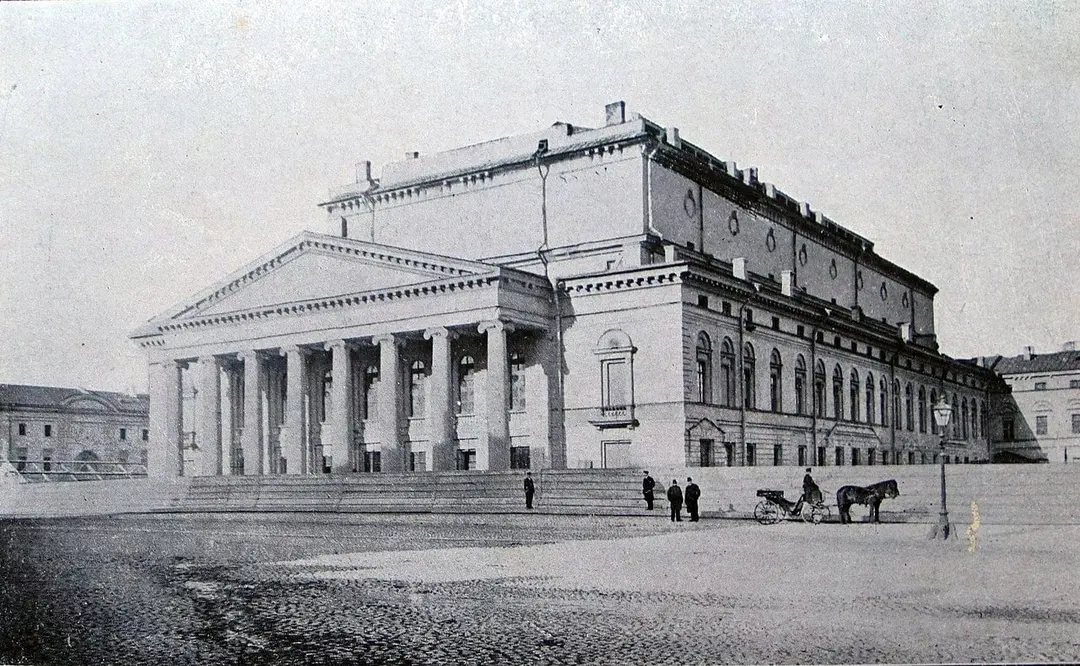
    The Bolshoi Theatre in Saint Petersburg, also known as the Kamenny Theatre (Stone Theatre), was one of the most important opera and ballet venues of the Russian imperial era. Opened in 1783 under Catherine the Great, it quickly became a cultural cornerstone of the city. The stage played a decisive role in shaping Russian musical theatre and hosted numerous significant premieres. The building no longer exists in its original form, but its influence on Russian cultural history of the 18th and 19th centuries was lasting. As a historical predecessor of the Mariinsky Theatre, it is a key site for understanding Saint Petersburg's rich theatrical tradition.

  • Breakthrough of the Siege of Leningrad

    Breakthrough of the Siege of Leningrad

    Saint Petersburg

    culture

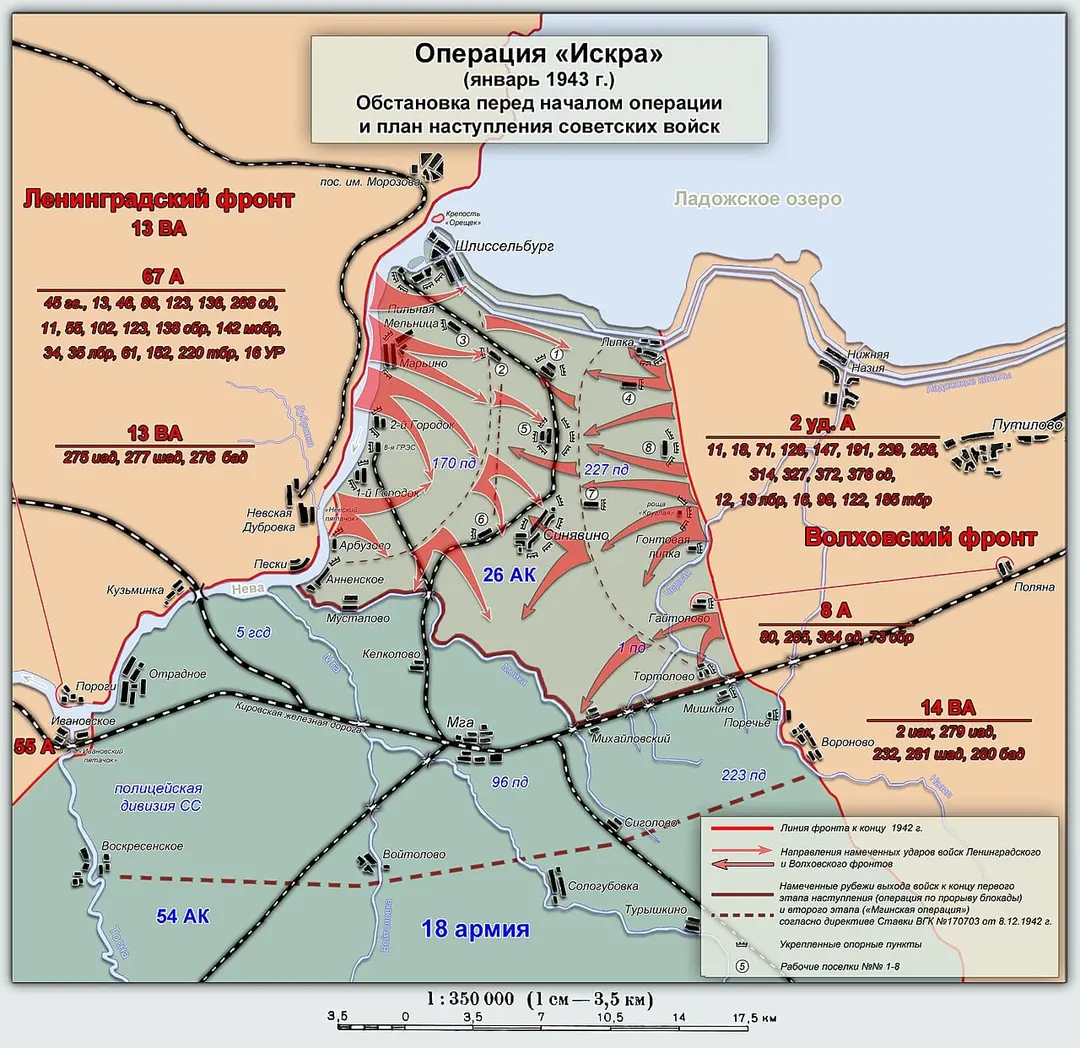
    The memorial complex dedicated to the Breakthrough of the Siege of Leningrad commemorates one of the most decisive military operations on Soviet soil during World War II. In January 1943, units of the Leningrad and Volkhov Fronts broke through the German encirclement of the city, opening a narrow corridor eight to eleven kilometres wide — enough to reconnect Leningrad with the rest of Soviet territory. Operation Iskra, planned under Marshal Zhukov, cost thousands of lives but ended the complete isolation of the city after more than eighteen months. The memorial is a solemn, deeply moving site for anyone seeking to understand the history of World War II on the Eastern Front.

  • BTR-80 Armoured Personnel Carrier

    BTR-80 Armoured Personnel Carrier

    Saint Petersburg

    cultureknowledge

    The BTR-80 is a Soviet 8×8 wheeled amphibious APC introduced in 1985 to replace the BTR-60 and BTR-70. A diesel engine replaced the problematic twin-petrol setup of predecessors, dramatically improving reliability. First deployed during the Soviet-Afghan War, it remains in widespread service globally today.

  • Catherine Palace

    Catherine Palace

    Saint Petersburg

    architectureculturelocal gems+1

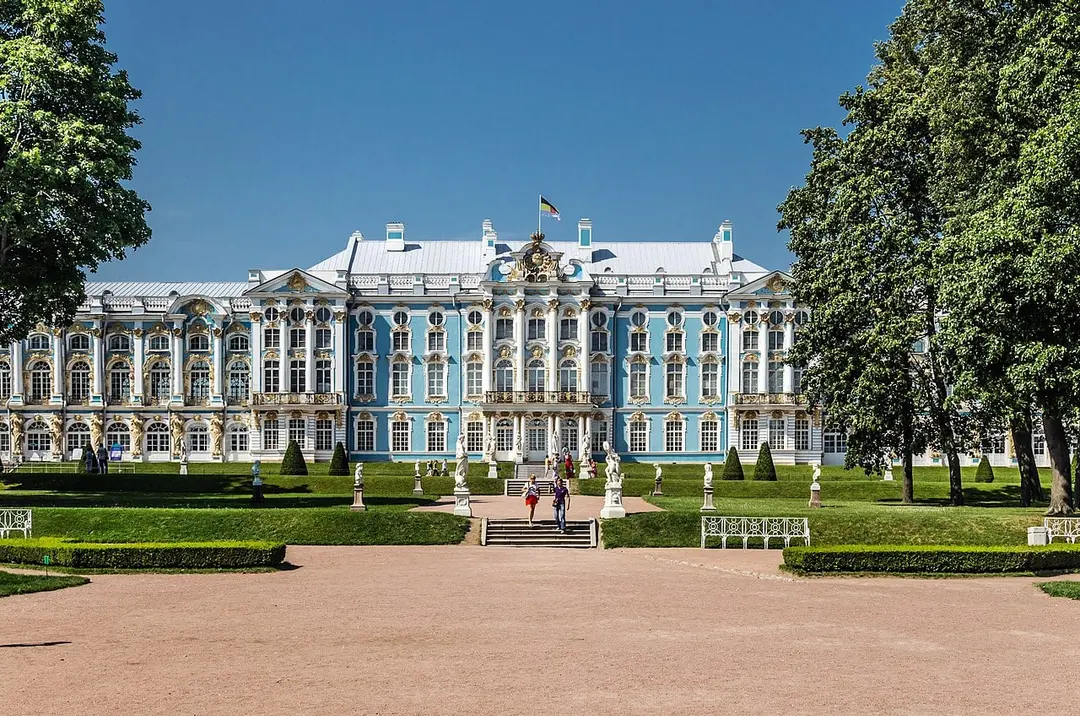
    The Catherine Palace is a magnificent Baroque residence in Tsarskoye Selo (Pushkin), around 25 kilometres south of St. Petersburg. Built between 1748 and 1756 for Empress Elizabeth to designs by architect Bartolomeo Rastrelli, it is considered a masterpiece of Russian Rococo. Its most famous highlight is the Amber Room – a state chamber lined entirely with amber panels, looted during World War II and painstakingly reconstructed in the 1990s. Since 1990, the palace has been part of the UNESCO World Heritage Site.

  • Farnese Hercules

    Farnese Hercules

    Saint Petersburg

    culture

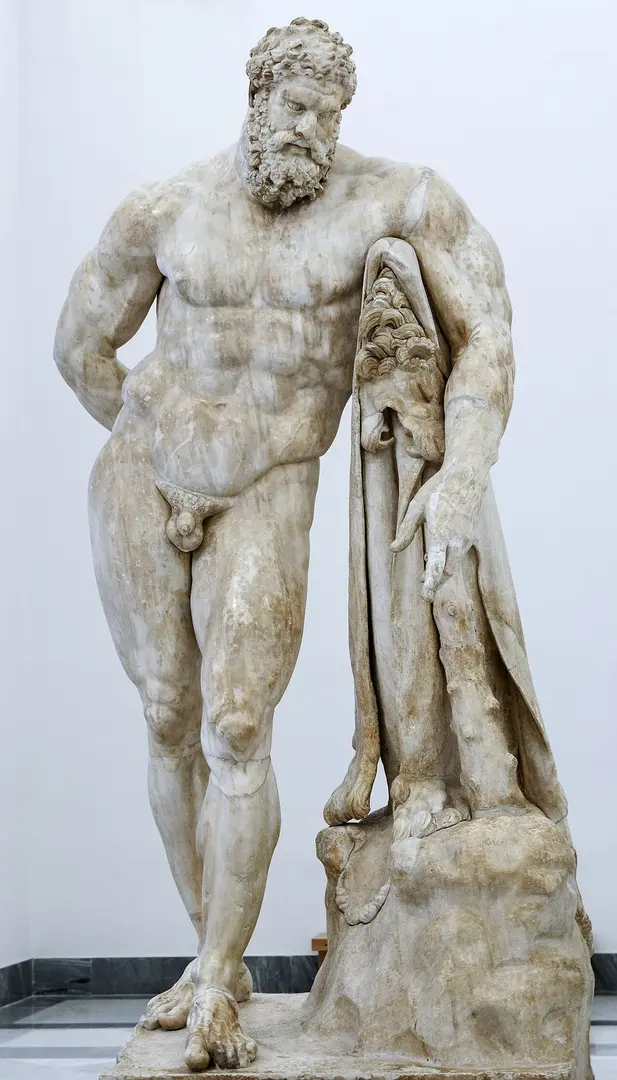
    The Farnese Hercules is one of the most celebrated ancient sculptures in existence — an over-life-size marble statue depicting the exhausted demigod resting on his club after his twelve labours. The original was created in the third century BC after a Greek bronze by Lysippos. Discovered in the Baths of Caracalla in the sixteenth century, the statue became the centrepiece of the Farnese collection in Rome and was regarded as the ideal embodiment of the male form. More than 200 copies testify to its extraordinary fame in antiquity and the Renaissance. Today the sculpture can be seen at the National Archaeological Museum in Naples — an unmissable stop for anyone fascinated by antiquity.

  • Field of Mars

    Field of Mars

    Saint Petersburg

    nature

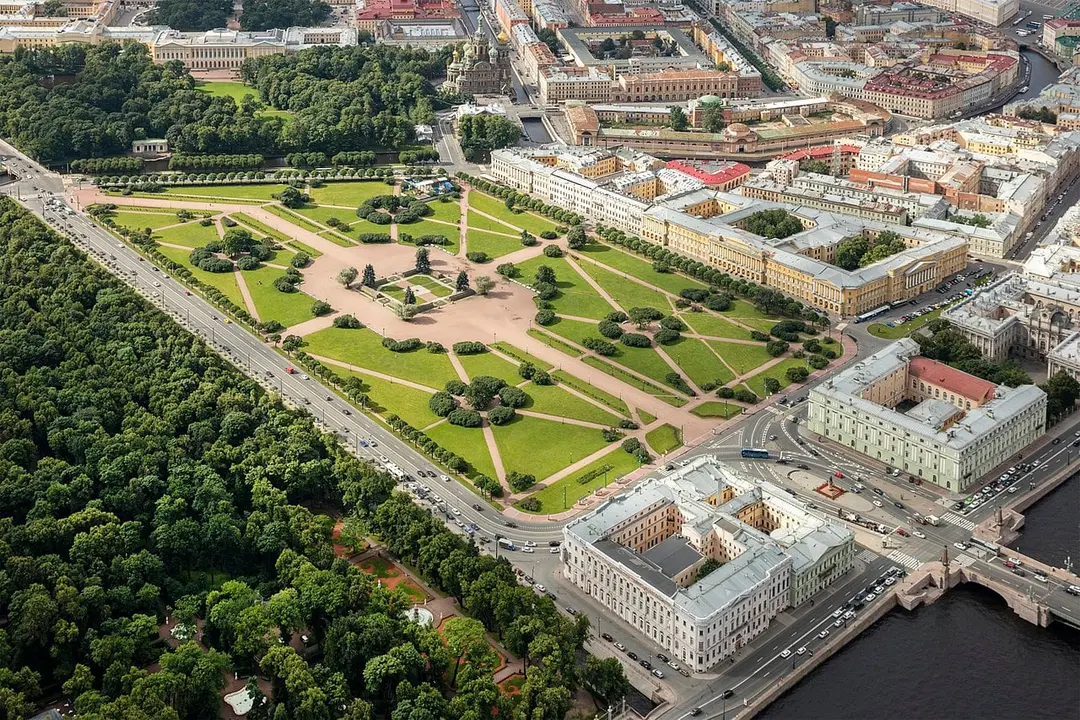
    The Field of Mars is a roughly twelve-hectare green space in the heart of Saint Petersburg, between the Moika Canal and the Summer Garden. Its history spans from an imperial parade ground in the 18th century to a revolutionary pantheon: after the February Revolution of 1917, 180 fallen fighters were buried here, and further graves were added during the Civil War. Since 1957 an Eternal Flame has burned in the center. Today the Field of Mars serves as both a place of remembrance and a popular recreation area – a quiet green island amid St. Petersburg's Baroque cityscape.

  • Formula of Sorrow

    Formula of Sorrow

    Saint Petersburg

    culture

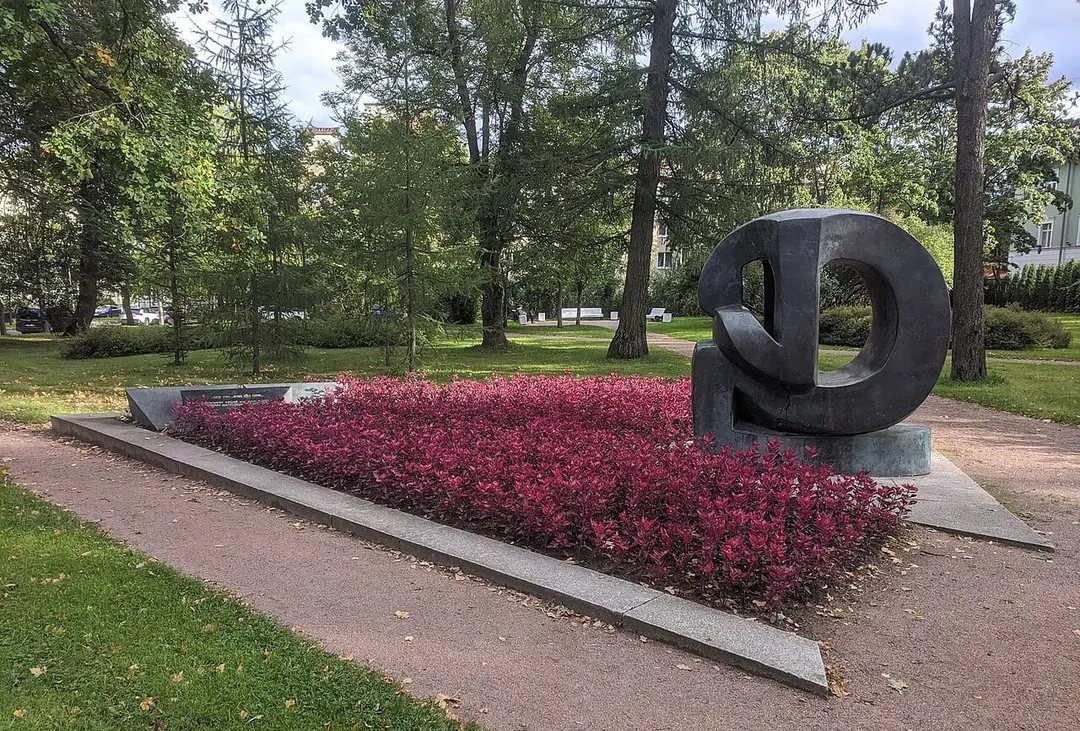
    The memorial "Formula of Sorrow" honours the Jewish victims of National Socialism murdered in 1941 during the German occupation of Pushkin, near Saint Petersburg. Unveiled in 1991 in a park at the intersection of Dvortsovaya and Moskovskaya streets — close to the Alexander Palace where mass executions took place — it marks a largely forgotten chapter of the Holocaust on Russian soil. Einsatzgruppe A killed between 3,600 and 4,100 Jews in the occupied Leningrad region, around 800 of them in Pushkin. Designed by Mihail Shemyakin, the memorial stands as a quiet, haunting testament to lives lost.

  • Francisco de Miranda

    Francisco de Miranda

    Saint Petersburg

    architectureculture

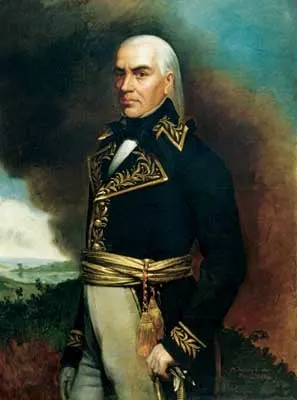
    The monument to Sebastián Francisco de Miranda in Saint Petersburg honours one of the most visionary architects of Latin American independence. Born in Caracas in 1750, Miranda served in the American Revolution and the Napoleonic Wars before dedicating himself entirely to the dream of a free and united Latin America. He envisioned a single state called Colombia — named after Christopher Columbus — governed by a popularly elected ruler bearing the title Inca. The sculpture in Saint Petersburg references Miranda's deep ties to Russia, which he visited as a young man and whose Enlightenment spirit left a lasting mark on him.

  • Gazprom Arena

    Gazprom Arena

    Saint Petersburg

    architectureoutdoor activities

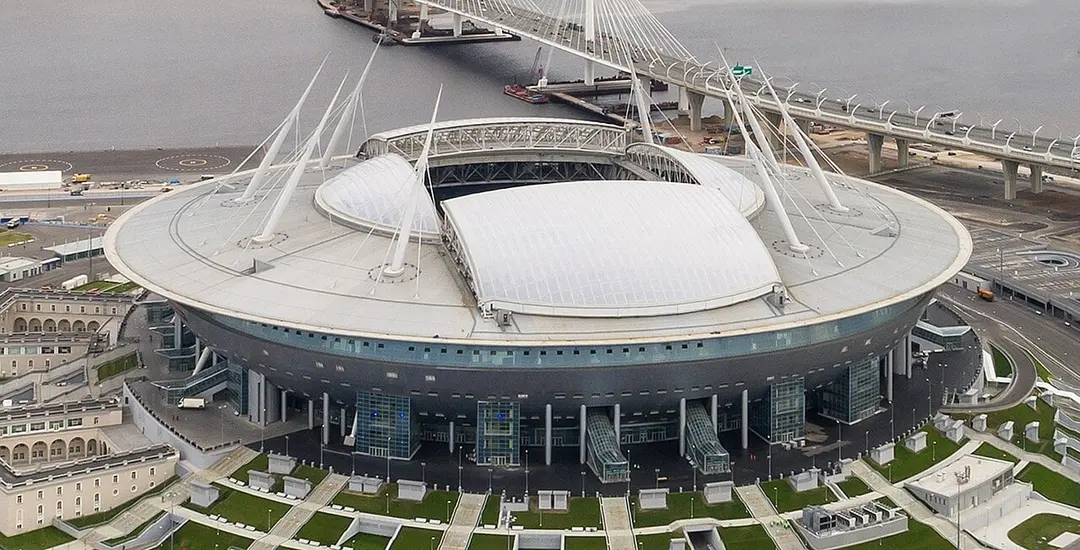
    Gazprom Arena is Saint Petersburg's largest football stadium, seating more than 68,000 spectators. It was built on Krestovsky Island on the site of the legendary Kirov Stadium, which was demolished in 2006. After years of construction the new arena opened in 2017 and serves as home to FC Zenit Saint Petersburg, one of the most successful clubs in Russian football. The distinctive folded steel roof structure makes it one of the most architecturally striking stadiums in Europe. In 2018 it hosted several group-stage matches and a semi-final of the FIFA World Cup.

Keep exploring

These places are just the beginning.

Rate places with a swipe — TravelType learns from your tags what you love and curates your own map. Private until you choose to share.

Create your profile