Google · Silviu Dobrică
Pairi Daiza
Brussels
architectureculturenature+4
history
Brussels and its wider region preserve a layered history visible across a remarkable range of places. Medieval monasteries — among them Affligem Abbey, Averbode Abbey, and the Abbaye de Nizelles — sit alongside the Basilica of Our Lady of Scherpenheuvel and the 14th-century Beersel Castle. The Belfry of Ghent and the AfricaMuseum, which addresses Belgium's colonial past, broaden the historical picture further. The Atomium stands as a reminder of the 1958 World's Fair, while the neoclassical Bourla Theatre in Antwerp reflects 19th-century urban ambition. Together these sites trace centuries of religious, political, and cultural change across the region.
38 places · Brussels, Belgium · Editorially curated
Brussels
Brussels
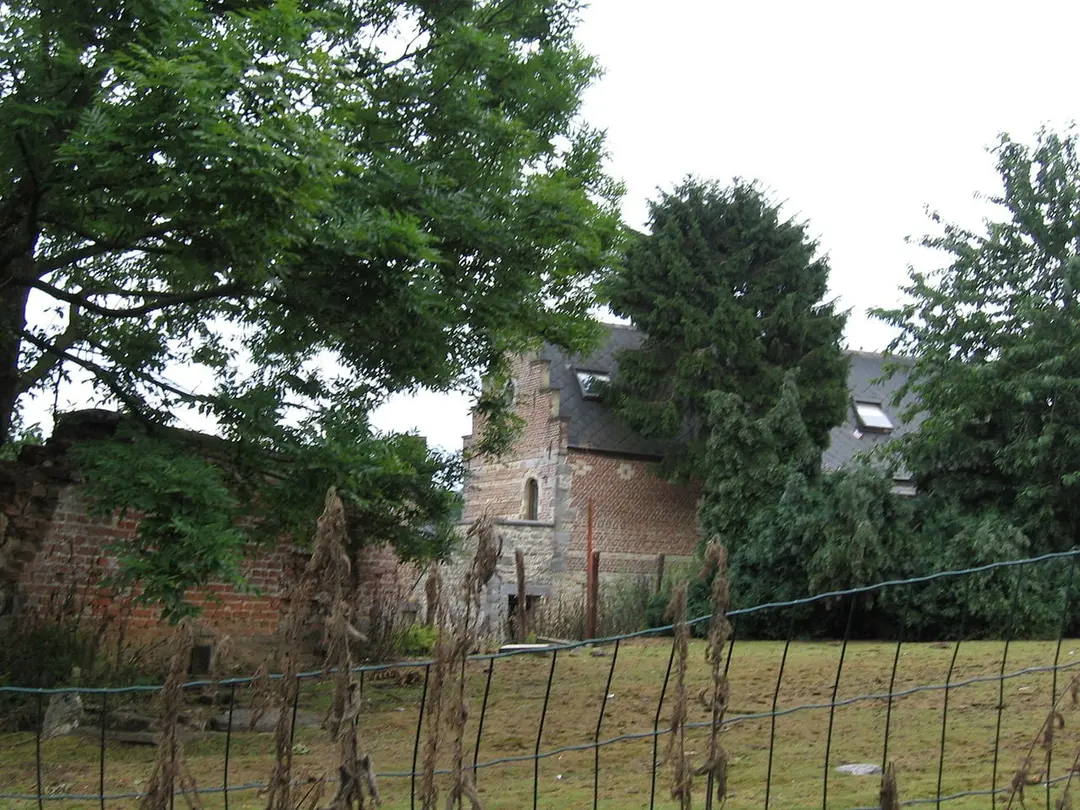
Nizelles Abbey in the Walloon municipality of Braine-l'Alleud operated as a Cistercian monastery from 1439 until its dissolution in 1784. Founded in the early 15th century near the village of Ophain, just south of Brussels, monks followed the Cistercian adaptation of the Benedictine rule here for more than three centuries. The French Revolution brought suppression and abandonment. Little survives beyond fragments of the original stonework. The site is a quiet remnant of monastic life in the Belgian countryside.
Brussels
Affligem Abbey is one of the oldest and most significant Benedictine abbeys in Belgium. Founded in 1062, it was considered the most important monastery in the medieval Duchy of Brabant — earning it the title Primaria Brabantiae. The abbey was destroyed and rebuilt several times over the centuries, most recently after the devastation of the French Revolution. Today the monks are best known for their abbey beer: Affligem beer has been brewed for over 900 years according to traditional recipes and is one of Belgium's most famous abbey beers. Visitors can explore the Romanesque monastic buildings, visit the abbey church, and purchase beer and other monastic products in the shop. A quiet, contemplative place away from the bustle of the city.
Brussels
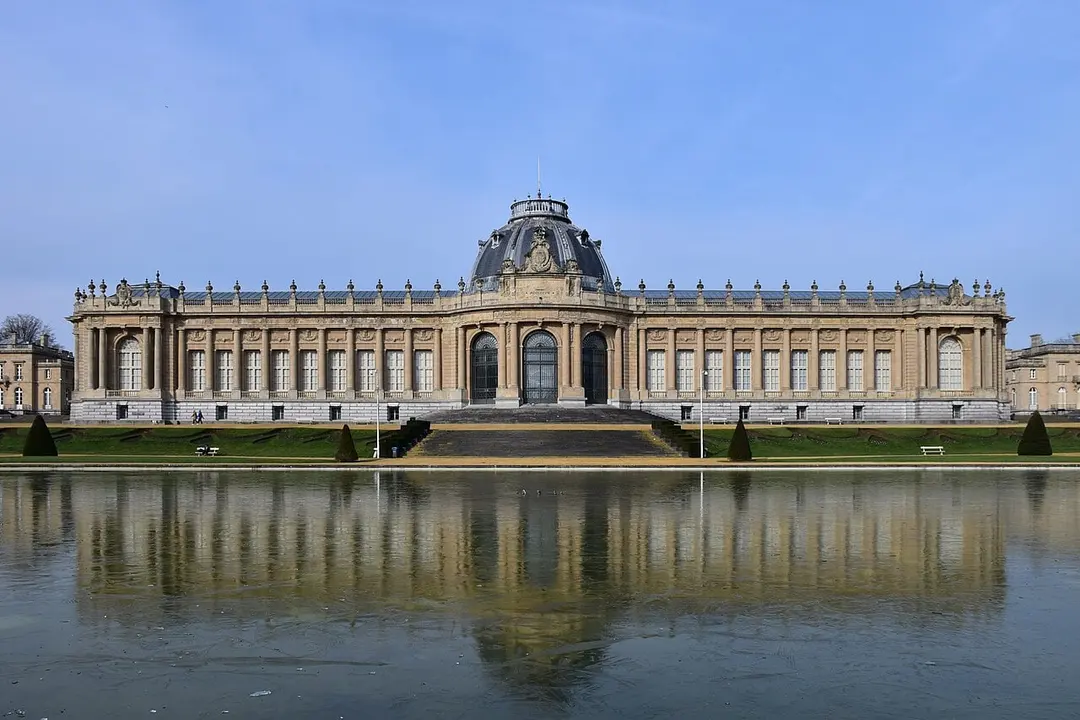
The Royal Museum for Central Africa in Tervuren near Brussels is one of the world's largest museums dedicated to Africa. Originally built in 1898 by King Leopold II to showcase his Congo Free State at the 1897 World's Fair, it carried an unexamined colonial narrative for decades. After an extensive renovation, it reopened in 2018 as the AfricaMuseum with critically reworked collections that put Belgium's colonial history at the forefront. The grand Wilhelmine-style palace building set in an expansive château park draws visitors for its architecture alone.
Brussels
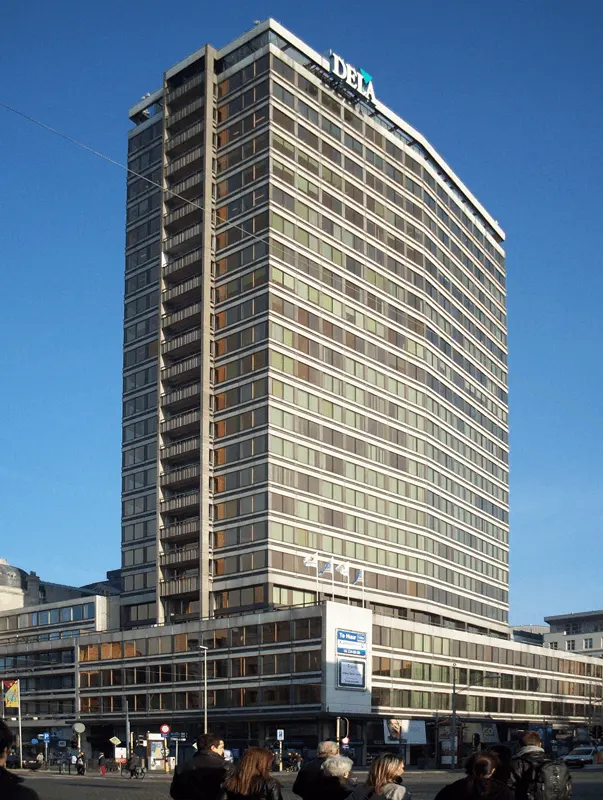
Antwerp Tower is an office and residential high-rise in the heart of Antwerp, originally built in 1974 as an office tower standing 87 metres tall. Following a major renovation in 2019–2021 in which two double-height floors were added, it now reaches 100.70 metres, making it the tallest residential building in the city. The building stands on De Keyserlei, the lively boulevard between the central station and the Meir shopping street – one of Europe's busiest city entrances. As a prominent element of the Antwerp skyline, the tower combines the austere post-war modernism of its original design with a contemporary mixed-use role.
Brussels
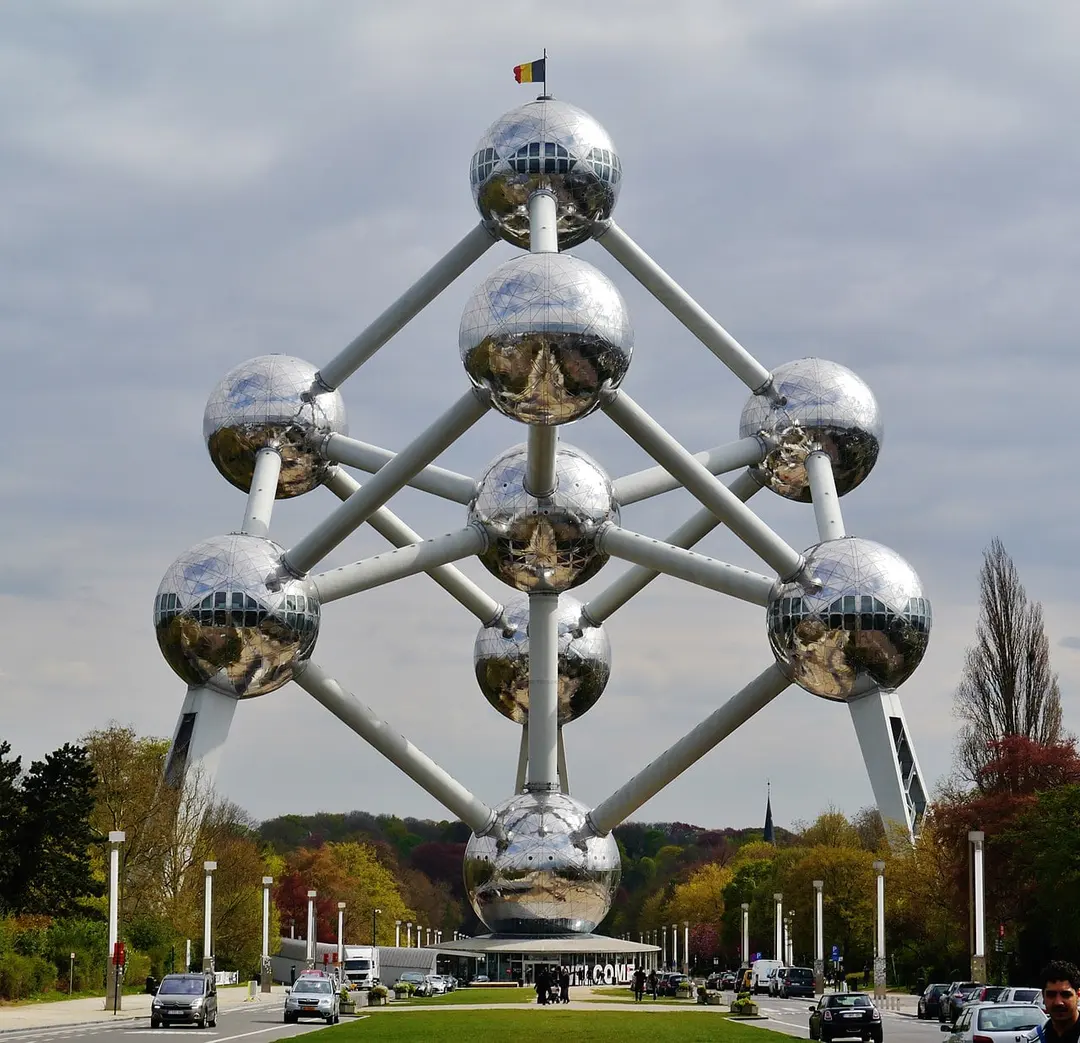
The Atomium is Brussels' most recognisable landmark, built as the centrepiece of the 1958 World's Fair. Engineer André Waterkeyn's design represents an iron crystal unit cell magnified 165 billion times: nine spheres connected by tubes, rising 102 metres. Originally conceived as a temporary structure, it is now a protected monument. Visitors can enter the spheres, which house exhibition spaces, a children's area, and a restaurant with panoramic views across the city. It stands in the Laeken district near the Royal Greenhouses and the Atomium Park.
Brussels
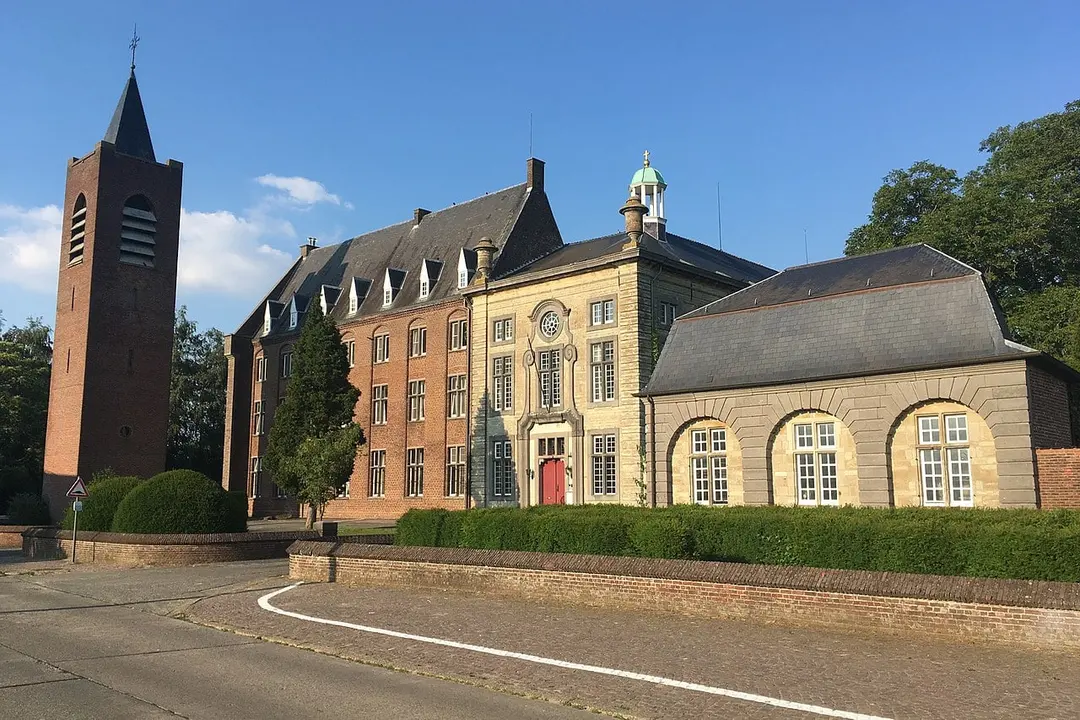
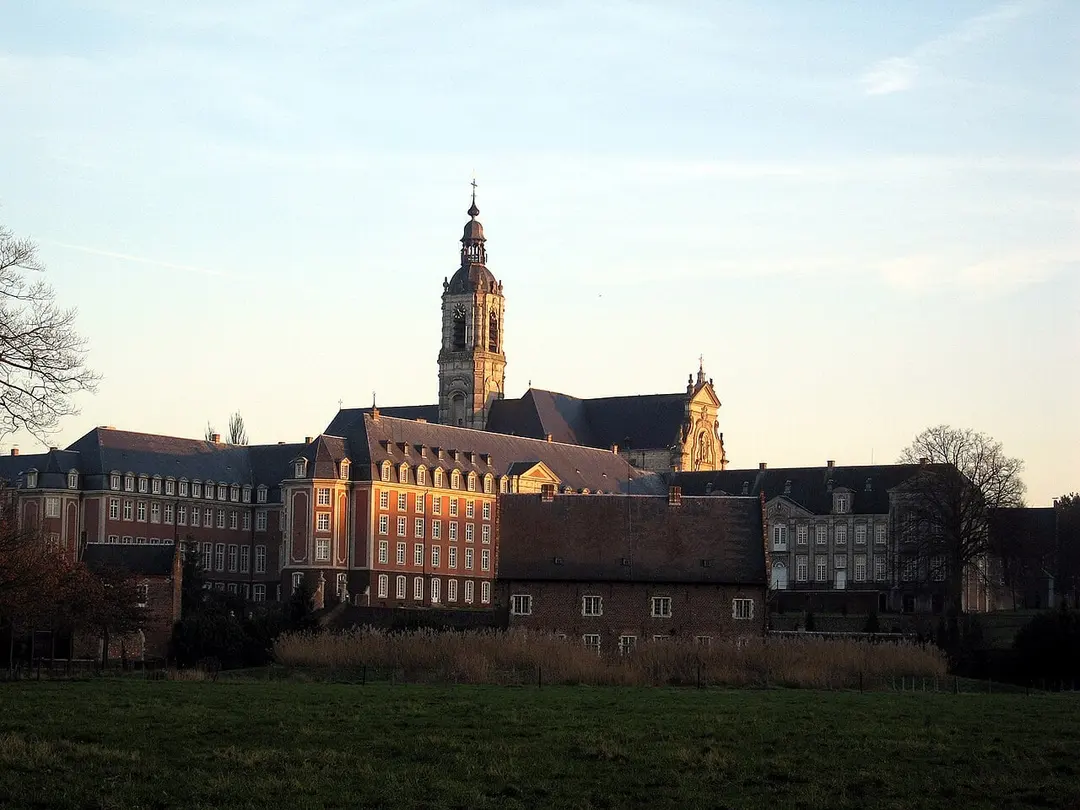
Averbode Abbey in the Flemish municipality of Scherpenheuvel-Zichem is one of Belgium's most significant Premonstratensian abbeys. Founded around 1134, it was suppressed during the French Revolution in 1797 and re-established in 1834. The abbey church is a striking synthesis of Baroque and Gothic with Renaissance ornamental details — built between 1664 and 1672 from local iron sandstone to designs by Antwerp architect Jan Van den Eynde II. During the 20th century, the abbey's press was one of Belgium's leading children's book publishers. The working monastery still welcomes visitors seeking quiet reflection today.
Brussels
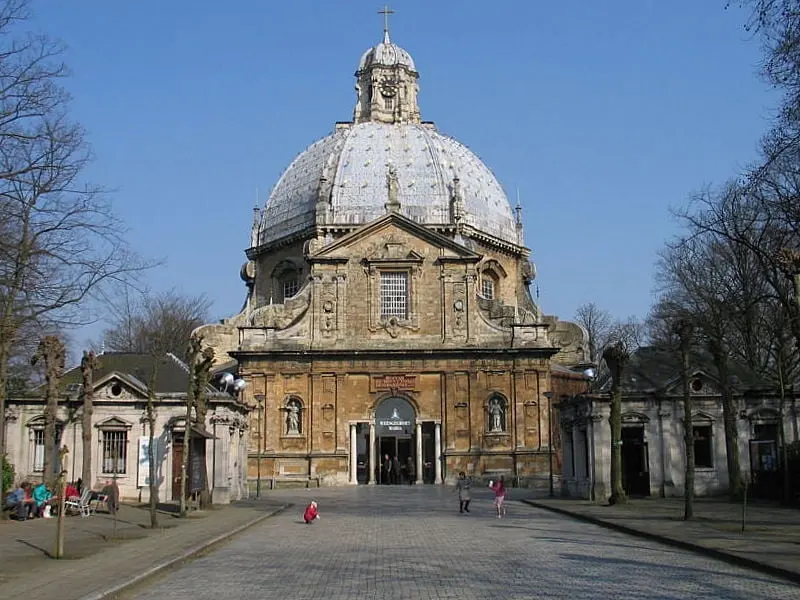
The Basilica of Our Lady of Scherpenheuvel in Scherpenheuvel-Zichem is reputedly Belgium's most frequently visited pilgrimage site. The circular church — an architectural rarity in northern Europe — was built from 1609 under the patronage of Archdukes Albert and Isabella and stands as a key work of Flemish Counter-Reformation architecture. Consecrated in 1627 and raised to a minor basilica in 1922, the church centres on a Gothic statue of Mary around which the pilgrimage cult grew. Hundreds of thousands of pilgrims visit each year, with particularly large gatherings during the November novena.
Brussels
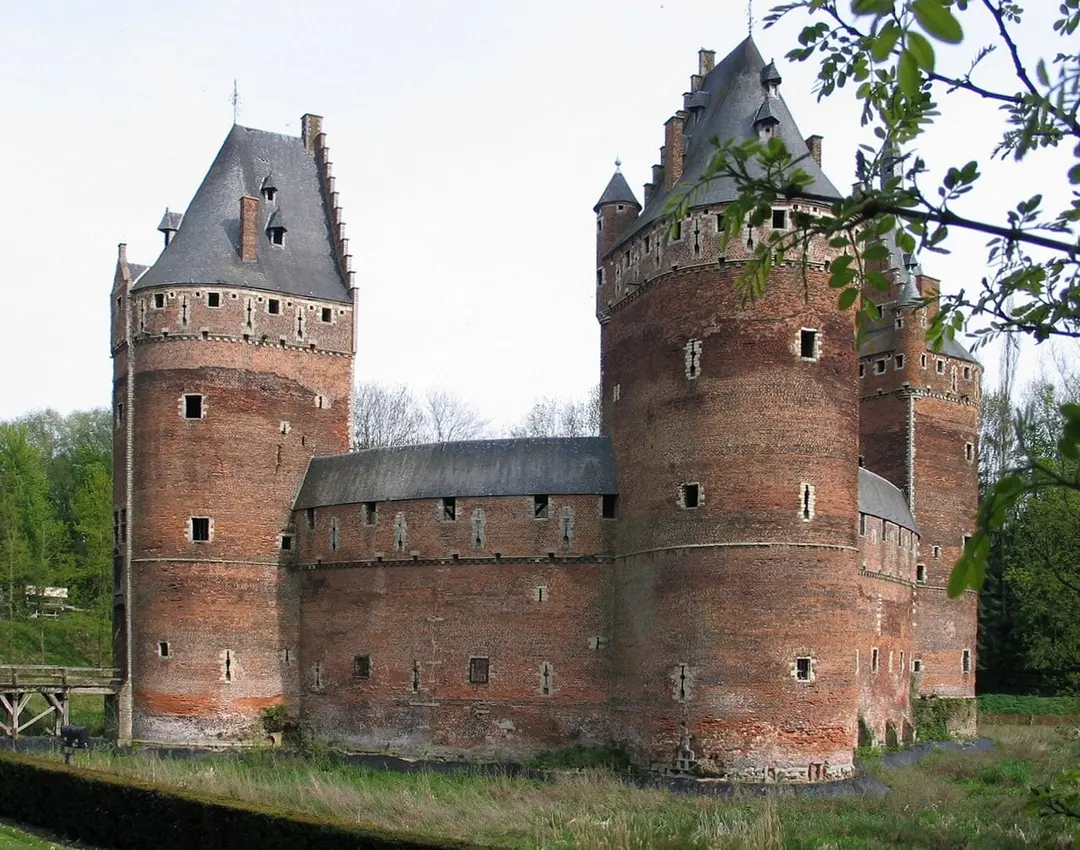
Beersel Castle is one of Belgium's best-preserved medieval castles, located in the municipality of Beersel south of Brussels. Dating to 1300 under the Duchy of Brabant, the water castle features three large circular brick towers around a circular enceinte, an unusual choice of material for fortifications of that era. Sacked twice and restored in 1491 and 1617, the castle underwent a thorough 20th-century restoration between 1928 and 1939. It is open to visitors and remains a striking example of Flemish medieval military architecture.
Brussels
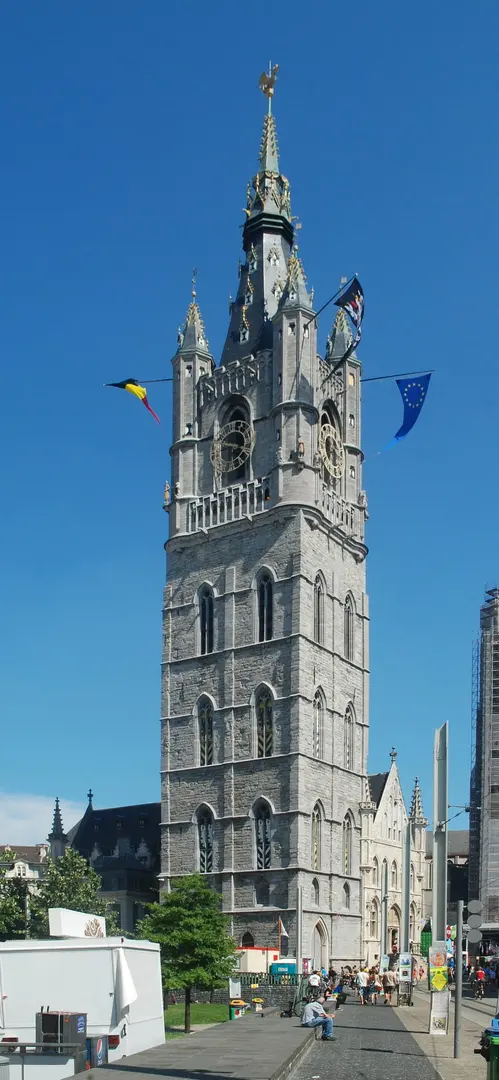
The Belfry of Ghent, at 91 metres, is the tallest belfry in Belgium and part of the UNESCO World Heritage Site comprising the Belfries of Belgium and France. It stands in the heart of Ghent's old city centre, flanked by Saint Bavo's Cathedral and Saint Nicholas' Church — together forming the famous Ghent Three Towers, one of Belgium's most iconic skylines. Construction began in 1313 and continued over centuries; the dragon weathervane at its peak is a symbol of Ghent's civic freedoms. Inside, an exhibition tells the story of urban autonomy and the city's powerful guilds.
Brussels
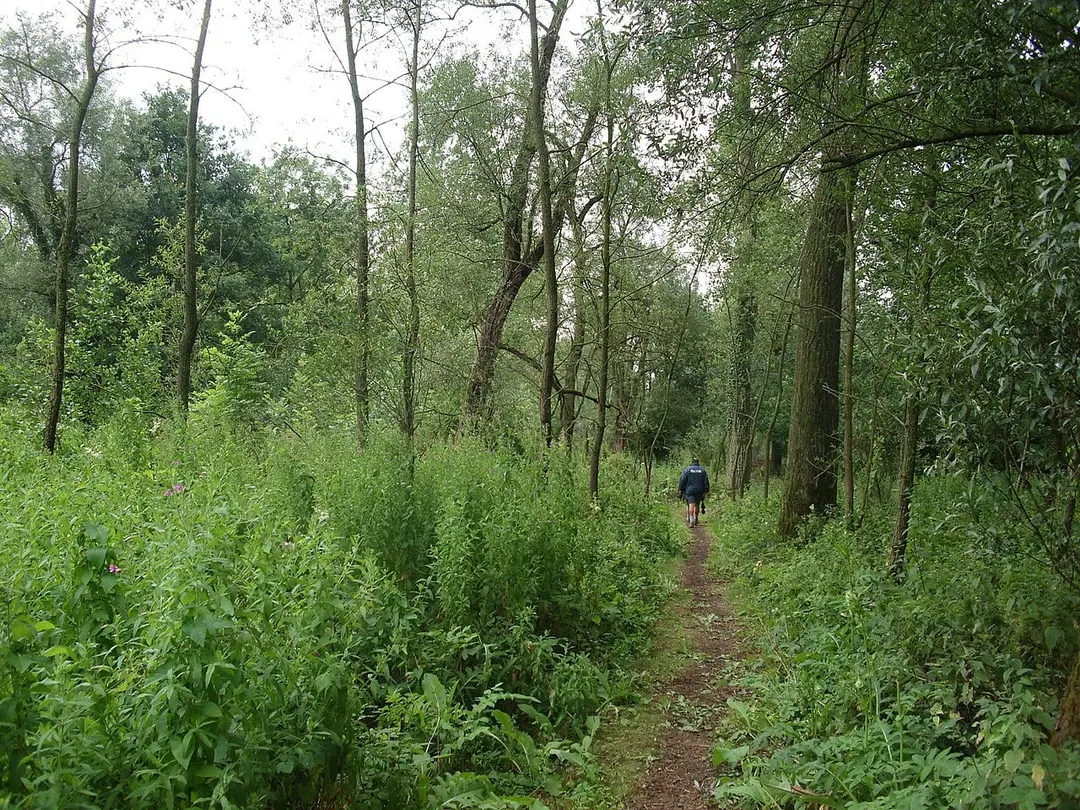
Den Dotter is a nature reserve of about 205 hectares in the sub-municipalities of Aaigem and Heldergem in the East Flemish Denderstreek region of Belgium. The area is characterised by marshland and wet meadows traversed by the Molenbeek-Ter Erpenbeek stream, which is known for its historic mills along the route. The area is largely uninhabited and provides habitat for many bird species and typical wetland flora. The name Blauwbos refers to a wooded section within the reserve. It is a quiet destination for nature lovers and birdwatchers away from Belgium's main tourist centres.
Brussels
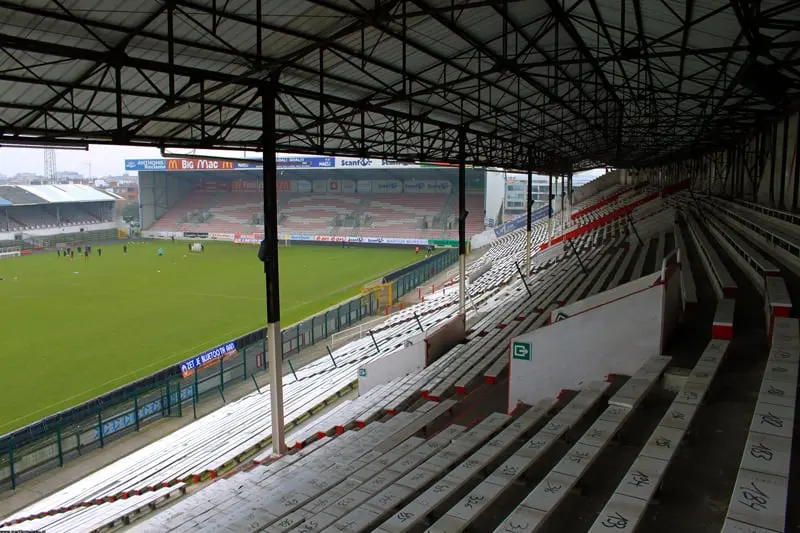
The Bosuilstadion in the Deurne district of Antwerp is one of the oldest continuously used football grounds in Belgium. Opened in 1923, it has been the home ground of Royal Antwerp FC ever since — the club itself being the oldest football club in Belgium, founded in 1880. The stadium holds around 21,000 spectators, including 800 covered VIP seats. Named after the nearby Bosuilplein, the ground has an old-school atmosphere that newer, purpose-built arenas rarely replicate. Despite modern alternatives, the club has stayed faithful to this historic site.
Brussels
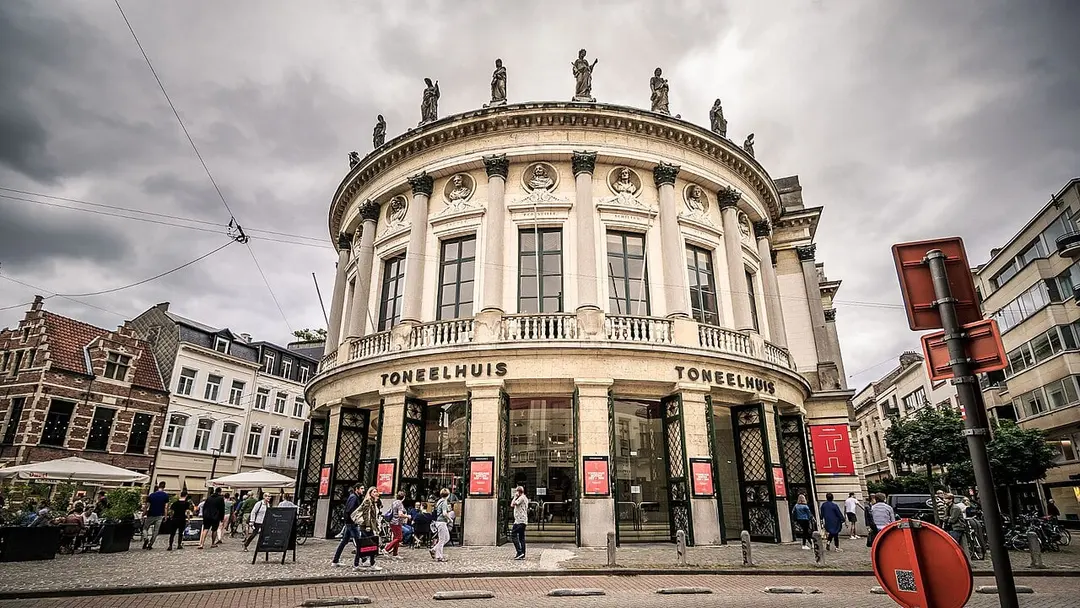
The Bourla Theatre is a neoclassical theatre in central Antwerp, designed by city architect Pierre Bourla. Construction began in 1829 but was interrupted by the Belgian Revolution; the theatre finally opened in 1834 on the site of the former Tapissierspand tapestry market. With seating for around 900, it opened under French ownership as the Grand Théâtre before eventually becoming a Flemish institution. Today it is home to Het Toneelhuis, a major Flemish theatre company formed from the merger of two older ensembles, and is protected as Belgian cultural heritage.
Brussels
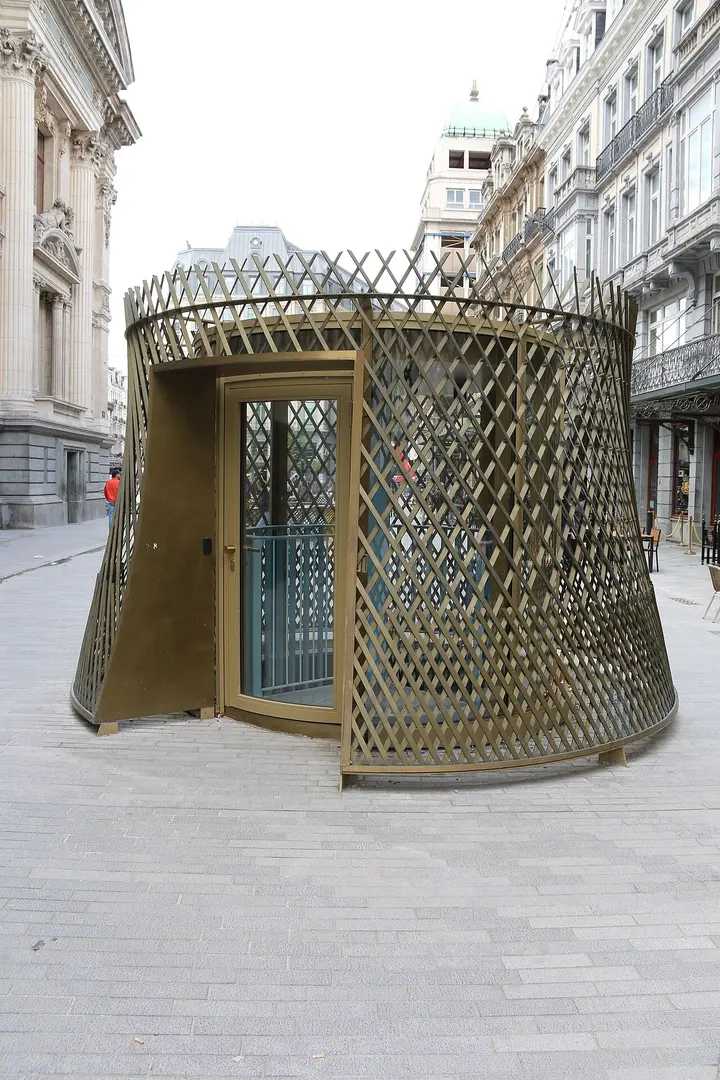
Bruxella 1238 is an archaeological site beneath the Bourse Palace in central Brussels, where the foundations of a Franciscan convent founded in 1238 were uncovered. The site carries particular historical weight: Duke John I of Brabant, victor of the Battle of Worringen, chose this convent as his burial place. Excavations between 1988 and 2022 brought to light building foundations, burial grounds, and various artefacts. These are now presented through an immersive underground exhibition that leads visitors through nearly a thousand years of Brussels history — right below one of the city's most recognizable landmarks.
Brussels
The Chapel Church – formally Our Lady of the Chapel – is one of the oldest surviving buildings in Brussels. Its origins date to the early 13th century, with the Gothic nave added across the 14th and 15th centuries. The church stands in the heart of the Marolles, historically Brussels' poorest district and still its most characterful quarter, known for the flea market on Place du Jeu de Balle. That contrast – medieval Gothic architecture anchoring a working-class neighbourhood – gives the church significance beyond its religious function. In everyday speech it is more often called the Kapellekerk, after the Dutch name.
Brussels
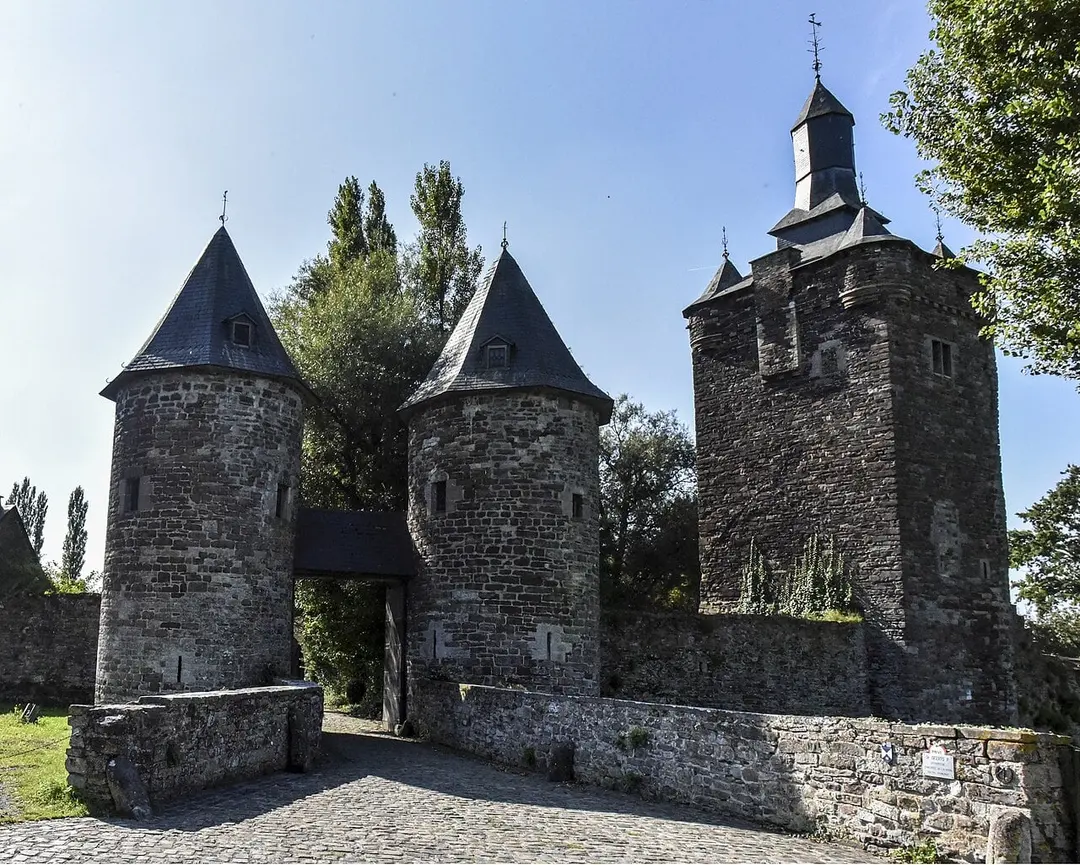
The Château de Sombreffe is a lowland castle in the Belgian municipality of Sombreffe, Province of Namur, with history dating to the 13th century. Set in flat terrain south of Brussels, it differs from the rocky Ardennes castles — instead it speaks of feudal lordship over agricultural territory. The château is classified as a Patrimoine majeur de Wallonie. Sombreffe is also known as the site of a preliminary battle of the Waterloo campaign in June 1815. The castle itself is not generally open to the public but is visible as part of the Walloon cultural landscape.
Brussels
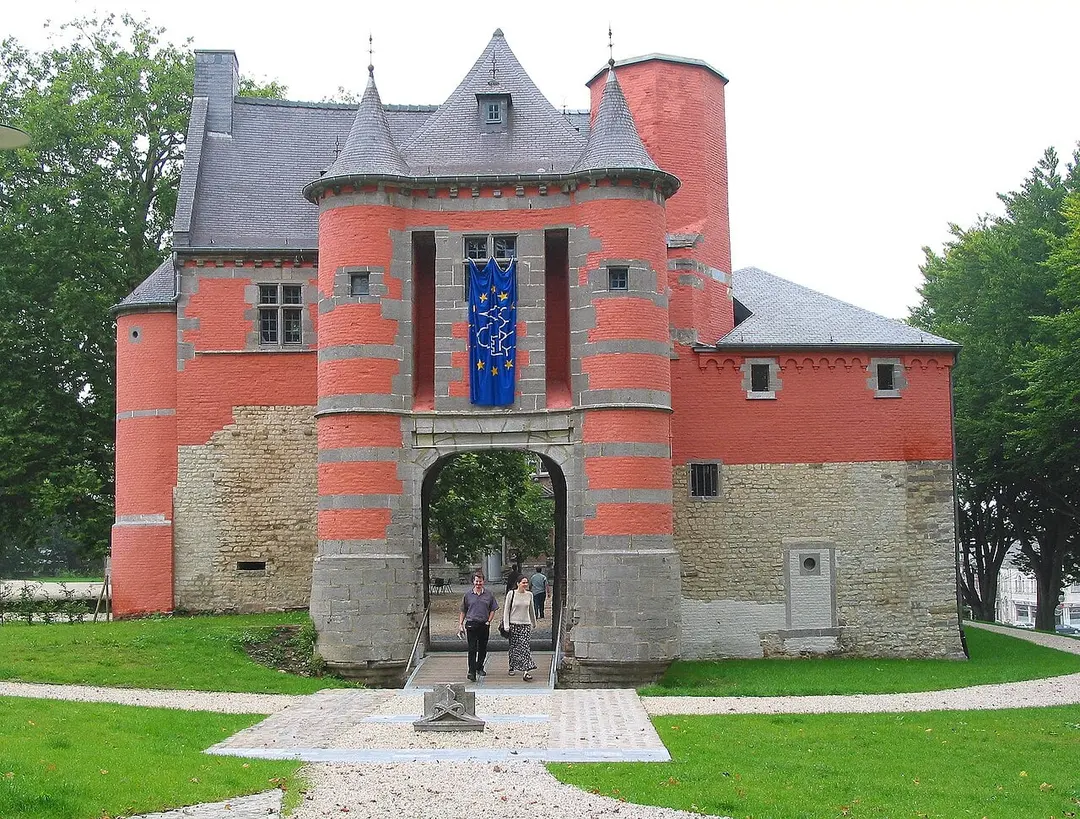
Château de Trazegnies is located in Trazegnies, part of the municipality of Courcelles in the Belgian province of Hainaut in Wallonia. It is one of the historic noble seats of the region and is listed as a Walloon cultural monument. The castle's history is closely tied to the House of Trazegnies, one of Belgium's oldest noble families. The current structure bears features from multiple architectural periods. As part of Wallonia's built heritage, it contributes to the historical character of the Hainaut region.
Brussels
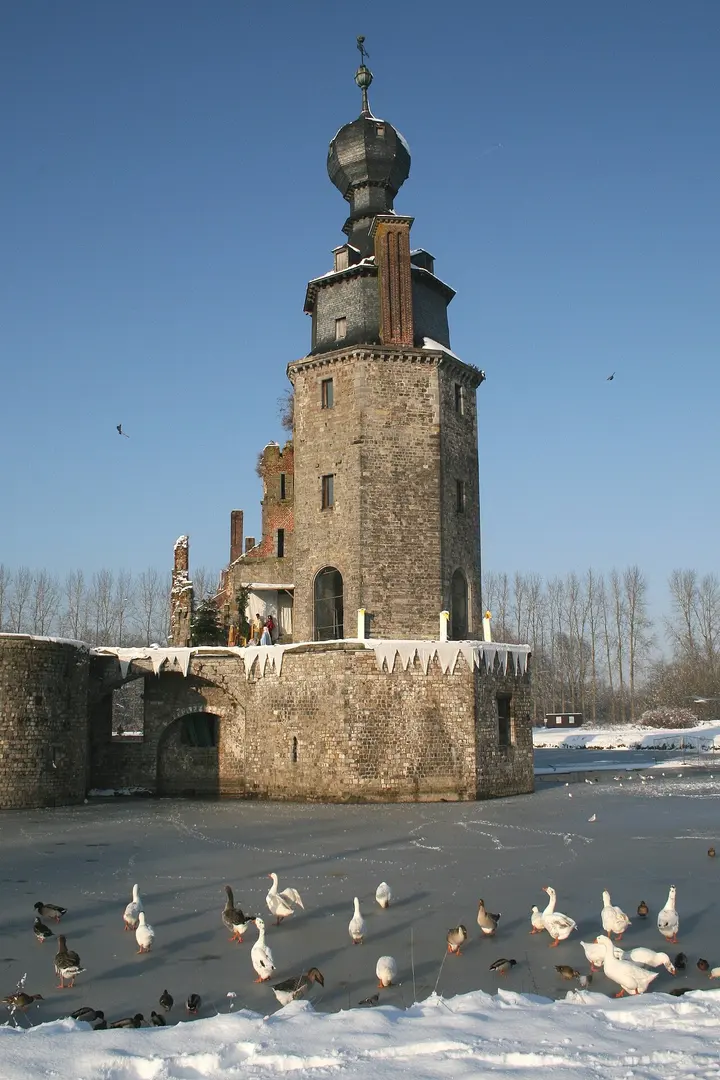
Château d'Havré is a ruined castle in the village of Havré, part of the city of Mons in the Walloon province of Hainaut, Belgium. Dating from 1226, it passed through the hands of noble families including Enghien, Harcourt, and Croÿ, and was repeatedly besieged, damaged, and rebuilt. Most of its surviving fabric dates from the 14th to 17th centuries; the current form emerged from extensive reconstruction in the late 16th century. Listed as a protected monument since 1936, both the buildings and the castle garden are open to visitors.
Brussels
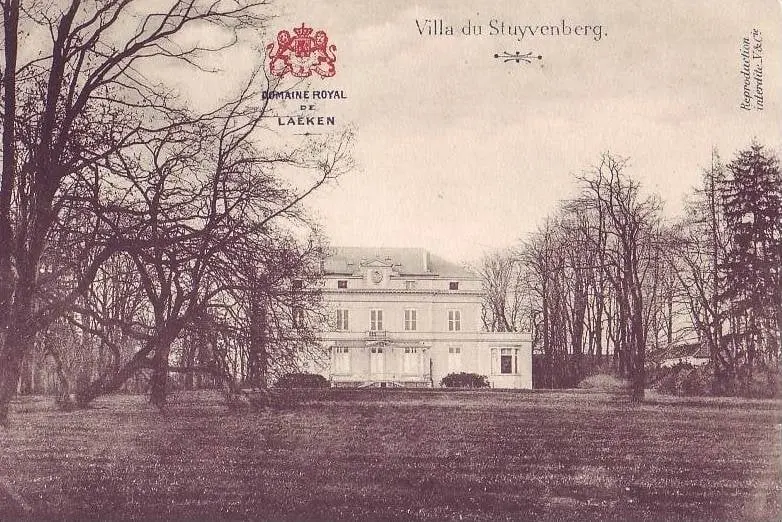
The Château du Stuyvenberg is a Baroque estate in Laeken, northwest of Brussels, built in 1725. It came into Belgian state ownership in 1840 for 200,000 francs and has since served as a secondary residence for the royal family, used for diplomatic receptions and private stays. The château sits close to the Royal Palace of Laeken and the Villa Schönenberg, home of Princess Astrid — together forming a royal enclave at the northern edge of the capital. The property is not open to the public; its gardens and façades can only be glimpsed from the surrounding parkland.
Brussels
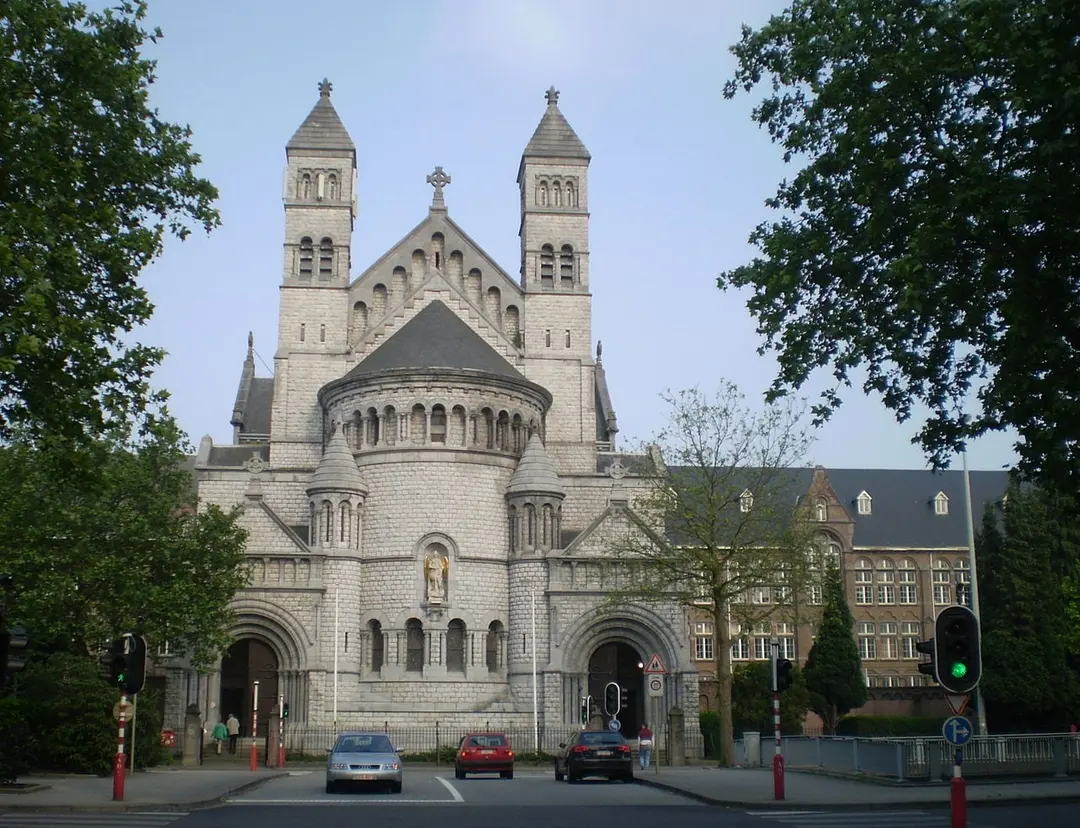
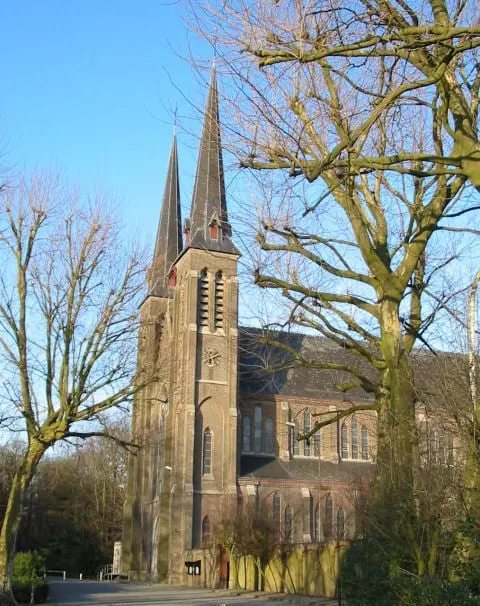
The Church of St. John Berchmans in Etterbeek, a municipality of Brussels, is the chapel of Saint Michel College and has belonged to the Society of Jesus since its construction between 1908 and 1912. It is dedicated to Saint John Berchmans, a 17th-century Belgian Jesuit saint. The building was designed in the Neo-Romanesque style and integrates quietly into the college grounds. Its restrained facade draws little attention — characteristic of Jesuit school architecture, which typically prioritizes function over display. Today the church is actively integrated into the daily life of Saint Michel College and is accessible to visitors outside school hours. Etterbeek is a well-connected Brussels municipality with several European institutions nearby.
Brussels
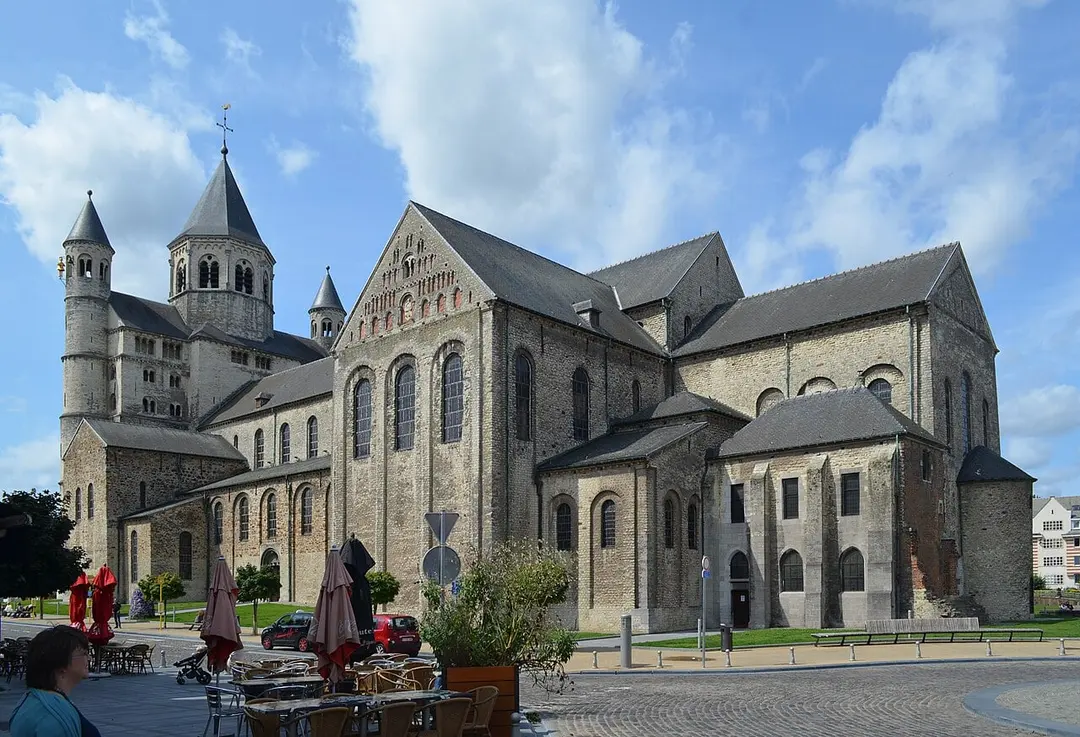
The Collegiate Church of Sainte-Gertrude in Nivelles is one of the most significant Romanesque churches in Belgium. Construction began shortly after the year 1000 — possibly from 1020 as a replacement for an earlier structure — and the church was consecrated in 1046. It is listed as a Walloon heritage monument and one of the defining landmarks of the Brabant Wallon region. The church is dedicated to Saint Gertrude of Nivelles, patron saint of cats and travellers. Her tomb inside the church made Nivelles a pilgrimage destination for centuries. The building was badly damaged in the Second World War and painstakingly restored. Today the collegiate church is the focal point of Nivelles town centre, easily reachable from Brussels.
Brussels
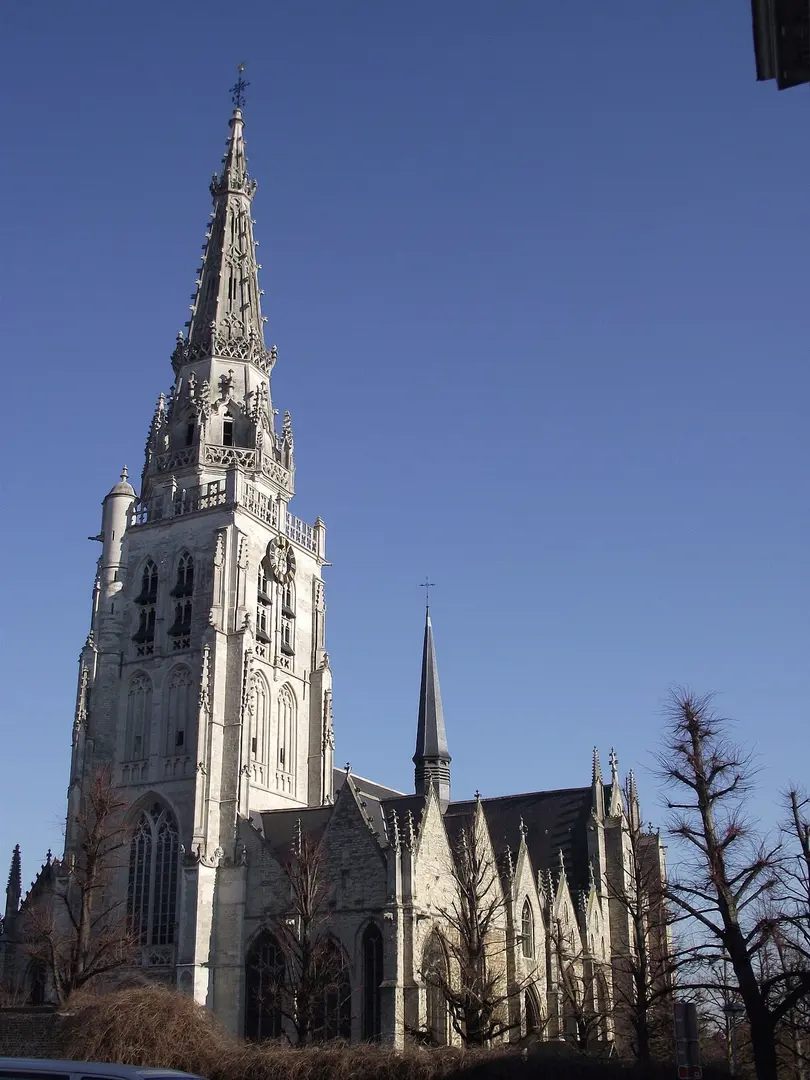
The Collegiate Church of Saints Peter and Guido is a Roman Catholic church in the historic centre of Anderlecht, a municipality southwest of Brussels. Built in the Brabantine Gothic style in the 14th century, it was originally the seat of a college of canons who celebrated its liturgy. The church is co-dedicated to Saint Guido of Anderlecht, an 11th-century saint venerated for his poverty and pilgrimages, and the patron saint of the municipality. Located directly above the Saint-Guidon metro station, it functions as the main parish church of Anderlecht.
Brussels
The Cromwell tank was Britain's primary cruiser tank in the Second World War, deployed from 1944 in Normandy and later in the Netherlands and Belgium. As the first British armored vehicle to combine high speed with adequate armor, it achieved this through the proven Rolls-Royce Meteor engine — derived from the Merlin aircraft engine. A preserved example stands in Belgium as an outdoor exhibit. The vehicle commemorates the liberation battles in the region and the role of British armored units during the Western campaigns of 1944–45. For visitors interested in military history, the tank offers a direct encounter with wartime engineering: the characteristic low profile and compact turret make the Cromwell recognizable from a distance.
Brussels
Brussels
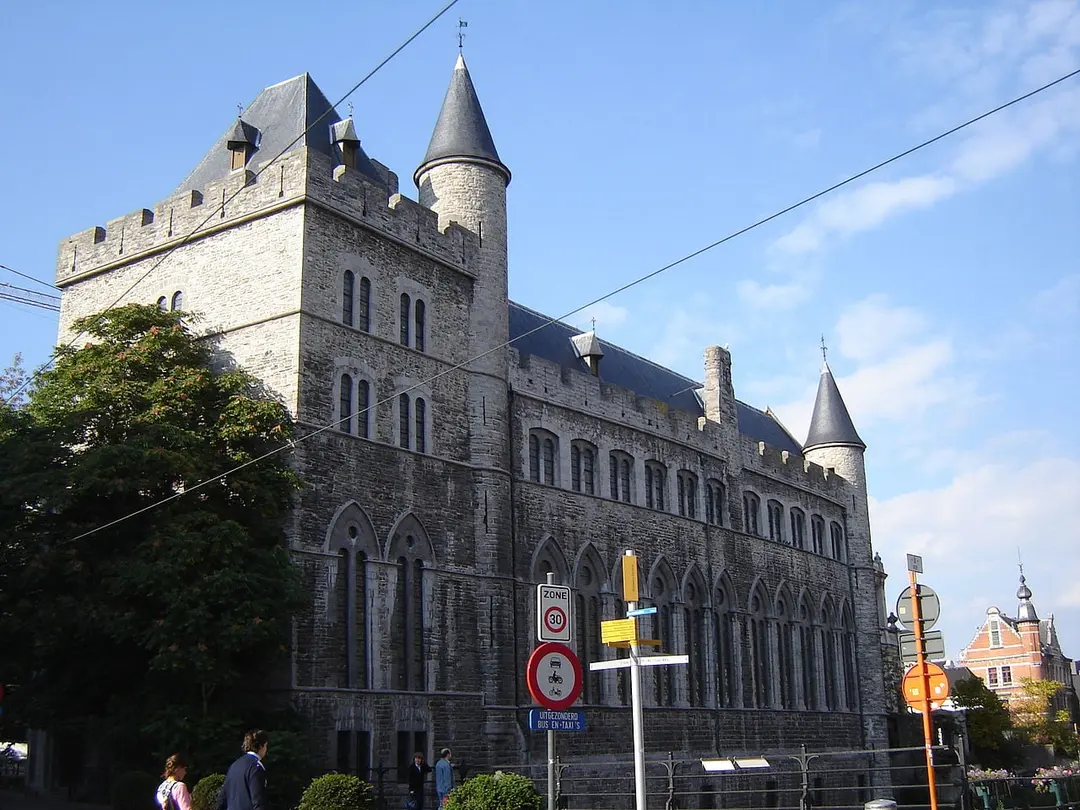
The Geeraard de Duivelsteen — literally "Gerard's Devil's Stone" — is a medieval fortress complex in the heart of Ghent and one of the oldest surviving secular stone buildings in Belgium. Its oldest section, built of large sandstone blocks, dates from the early 13th century and was constructed for Geeraard Vilain, a local knight nicknamed "de Duivel" (the Devil) on account of his dark complexion. Over the centuries the multi-wing complex served as a monastery, asylum, barracks, and prison. Today it houses the State Archive of the city of Ghent. Seen from the street, the massive facade with its tall lancet windows offers a striking and unexpected window into Ghent's deeper history.
Brussels
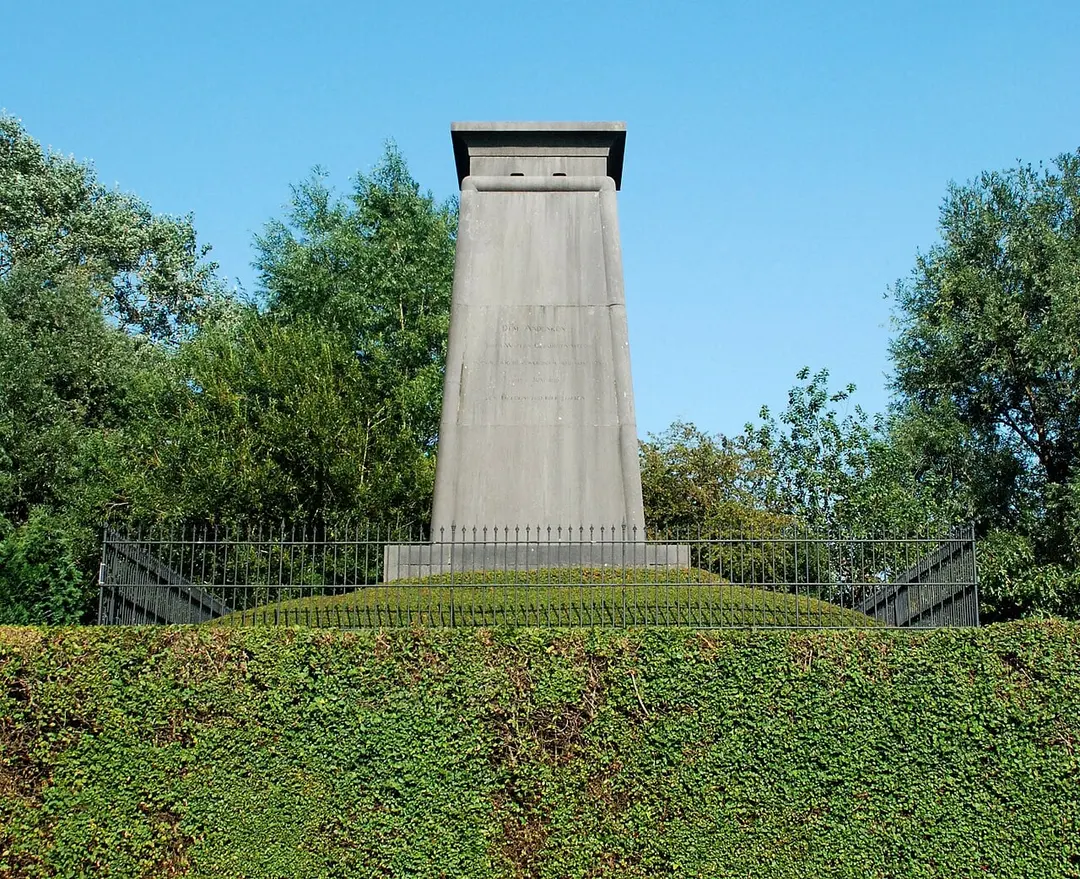
The Hanoverian Monument stands near the farmhouse of La Haye Sainte on the Waterloo battlefield in Belgium, just meters from where Hanoverian troops fought one of the bloodiest close-quarters engagements of the battle on 18 June 1815. It was erected in 1818 by surviving officers of the King's German Legion — an elite British unit composed almost exclusively of Hanoverians. The monument commemorates 42 fallen German officers, including Colonel Christian von Ompteda, who died defending the farmhouse. La Haye Sainte was held by a small German garrison for hours against vastly superior French forces — a fight that military historians still cite as a tactical case study. Today the monument is protected as a Walloon cultural heritage site and lies along one of the marked walking routes across the Waterloo battlefield.
Brussels
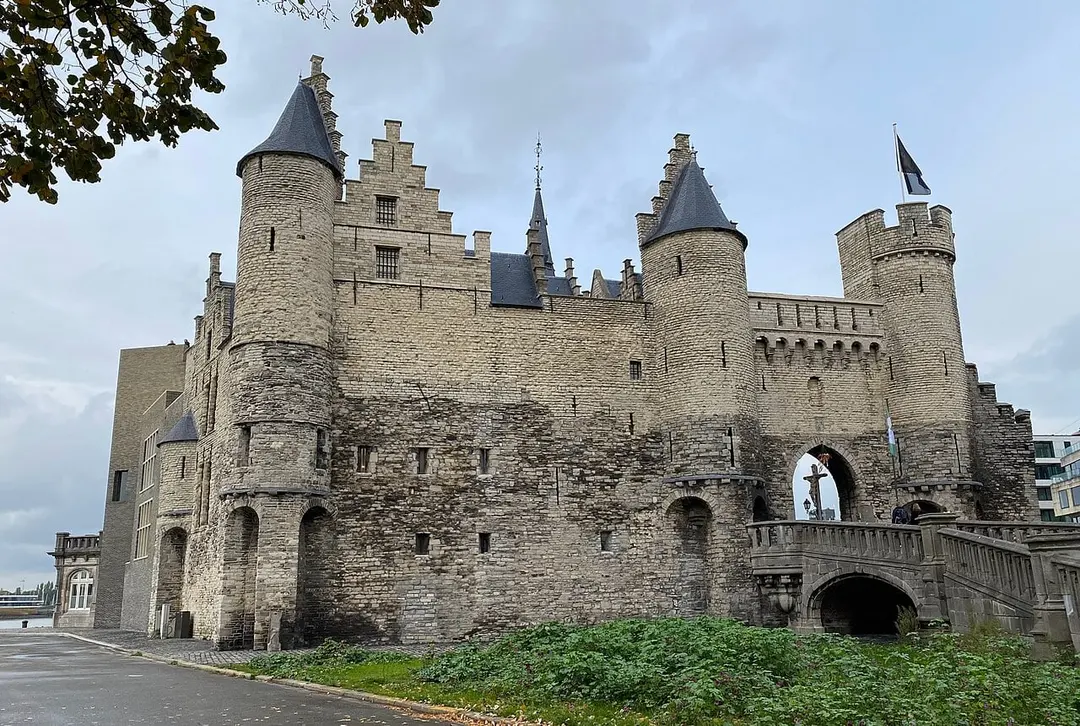
Het Steen — the Stone or the Castle — is Antwerp's oldest surviving building, standing directly on the right bank of the Scheldt. The fortification was built between 1200 and 1225 as the gateway to a larger ducal castle; the rest was demolished in the 19th century, but Het Steen survived. Over the centuries it served as a prison, then a museum. The restored structure draws visitors who want to feel the oldest layer of Antwerp along the river.
Brussels
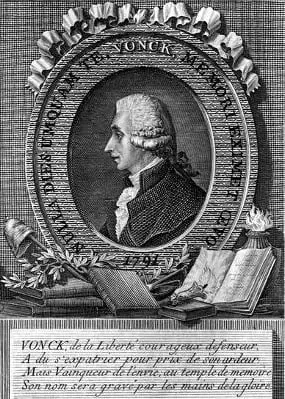
Jan Frans Vonck was a Flemish lawyer and one of the key leaders of the Brabant Revolution of 1789–1790, which briefly led to the founding of the United States of Belgium. Leading the Vonckists – the radical faction inspired by the French Revolution – he advocated for abolishing the feudal privilege system and establishing a more centralised government, directly opposing the conservative Statists. Vonck is regarded as a forerunner of modern Belgian liberalism, and his ideas have had a lasting influence on the country's political culture. Today his legacy is commemorated through monuments and street names across Belgium.
Brussels
Brussels
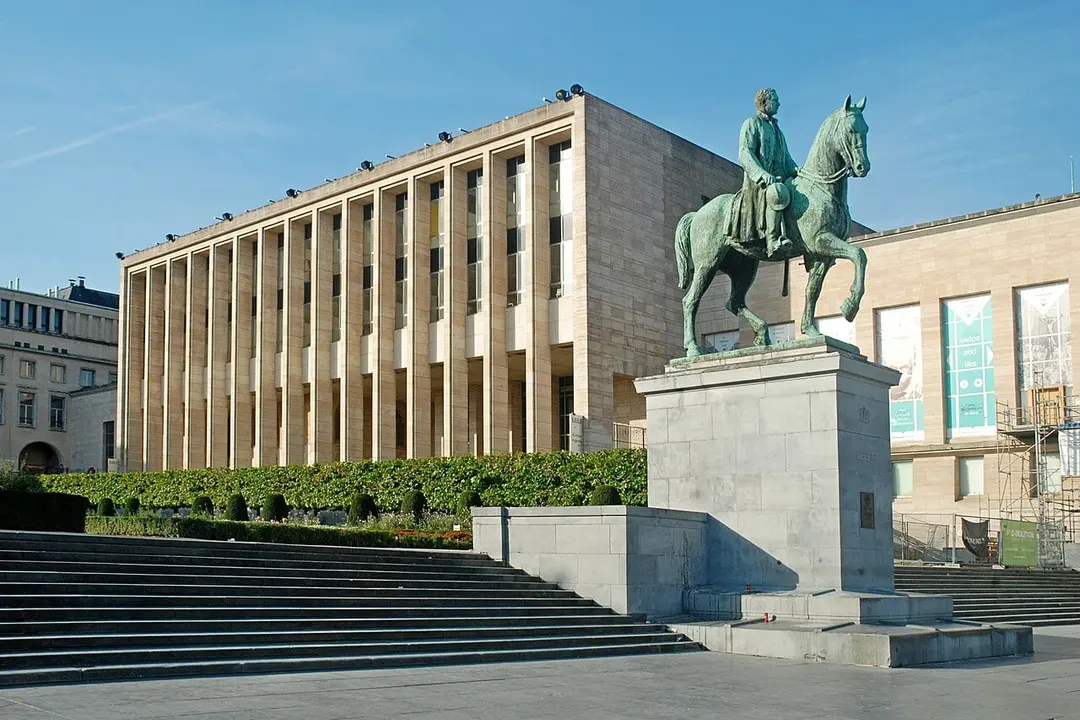
The Royal Library of Belgium (KBR) in Brussels is the country's national library and home to some of Europe's most important historical collections. Its centrepiece is the Library of the Dukes of Burgundy, one of the finest medieval illuminated manuscript collections in the world. Founded in 1837, the KBR serves as the legal deposit institution for all works published in Belgium. Beyond books, it holds maps, sheet music, coins, and archival manuscripts. Located on the Mont des Arts in the heart of Brussels, the library's reading rooms and exhibition spaces are open to researchers and the public alike.
Keep exploring
Rate places with a swipe — TravelType learns from your tags what you love and curates your own map. Private until you choose to share.